Top 5 Small Business Health Insurance Platforms in 2027 (ICHRA & Alternatives)

Top 5 Small Business Health Insurance Platforms in 2027 (ICHRA & Group Alternatives)
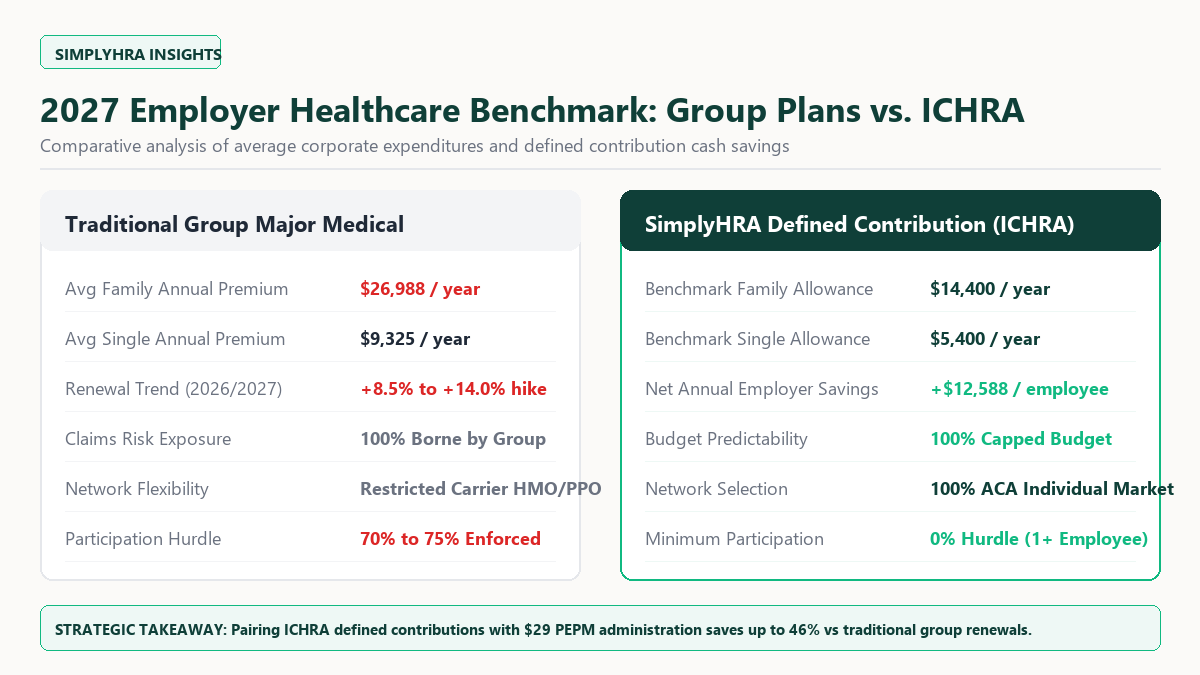
Offering competitive health benefits used to mean navigating bloated insurance brokerages, enduring unpredictable 10% to 20% annual premium rate hikes, and being forced into rigid, one-size-fits-all group plans. In 2027, the growth of Individual Coverage Health Reimbursement Arrangements (ICHRA) has revolutionized how small businesses and startups provide health coverage.
Rather than purchasing a fixed group plan, modern employers set a defined, tax-free monthly allowance, allowing workers to choose individual marketplace plans that suit their families and doctors. Below, we compare the top five small business health insurance and benefits platforms in 2027 based on pricing transparency, administrative overhead, and employee experience.
Why Defined-Contribution Healthcare Is Winning in 2027
Summary Comparison: Top 5 Platforms at a Glance
| Platform | Primary Model | Pricing (PEPM) | Setup & Platform Fees | Best For |
|---|---|---|---|---|
| 1. SimplyHRA | Pure Defined-Contribution ICHRA & HSA | $29 / employee / mo | $0 (No setup, base, or hidden fees) | Bootstrapped startups, SMBs (2-50 team members) wanting zero admin |
| 2. Gusto Benefits | Traditional Group Health Brokerage | $40 base + $6/ee + carrier premiums ($500-$800/mo) | Varies by payroll tier | Companies wanting payroll and traditional group insurance in one tab |
| 3. Take Command Health | Enterprise ICHRA & QSEHRA | $20-$25 / employee / mo | $250-$500+ onboarding fee + monthly base fee | Mid-market companies with complex multi-state union classes |
| 4. Rippling | Unified HRIS & Group Benefits | $35 base + $8/ee + carrier premium rates | Platform subscription fees apply | Tech-heavy companies needing deep device and IT management |
| 5. StretchDollar | Pre-Tax Health Allowance for Micro-SMBs | $12-$18 / employee / mo | Minimal base fee | Micro-businesses (1-5 employees) needing barebones allowances |
1. SimplyHRA: The Modern Defined-Contribution Standard
Overview: SimplyHRA is engineered specifically for startups and growing businesses that refuse to deal with carrier lock-in or surprise annual renewal rate spikes. The platform operates on flat defined-contribution accounting: employers define an allowance (e.g. $400/month), and employees shop on or off the exchange with automated claims verification.
Key Advantages:
- Completely Transparent Pricing: A flat $29 per enrolled employee per month. If an employee waives coverage, the employer pays $0 for that seat. There are zero platform fees, setup fees, or annual contract lock-ins.
- Automated Payment Rails: Direct ACH reimbursement funding means employers never have to manually enter reimbursements into payroll batches or manage complicated carrier bills.
- HSA Integration: Direct partnership with Saga Health allows employers and employees to open and contribute to modern Health Savings Accounts alongside their ICHRA.
- Universal Payroll Coordination: Works alongside Gusto, ADP, Rippling, and QuickBooks with payroll-ready deduction reporting.
2. Gusto: Integrated Payroll with Traditional Small Group Plans
Overview: Gusto is one of the most popular payroll providers for small businesses. Through its built-in insurance brokerage, Gusto allows employers to select and manage traditional small group medical, dental, and vision policies directly from their payroll dashboard.
Trade-offs:
- High Carrier Renewal Spikes: Because Gusto primarily brokers traditional group plans, employers remain vulnerable to 8% to 18% annual renewal rate increases.
- Participation Rules: Requires 70% to 75% employee participation, making it difficult for small teams where several employees already have coverage through a spouse.
3. Take Command Health: The Enterprise ICHRA Administrator
Overview: Take Command is one of the early pioneers of the ICHRA model, serving mid-market enterprises and companies with complex cross-state employee class structures.
Trade-offs:
- Setup and Base Fees: Unlike SimplyHRA's zero-setup model, Take Command typically requires setup and onboarding fees ranging from $250 to $500+, in addition to monthly platform minimums.
- Complex Implementation: Built primarily for HR departments with dedicated benefits specialists rather than self-serve founders.
4. Rippling: All-in-One HR, IT, and Benefits
Overview: Rippling combines payroll, device management, and benefits administration into a unified workforce operating system. For companies that already run their entire corporate IT and HR stack through Rippling, adding group benefits is a unified experience.
Trade-offs:
- Total Software Cost: Rippling's modular software pricing stacks quickly. When combined with traditional group health premiums, total monthly overhead is often significantly higher for small teams.
5. StretchDollar: Lightweight Health Allowances for Micro-Teams
Overview: StretchDollar is a streamlined health allowance tool designed specifically for very small businesses (1-5 employees) that have never offered health benefits before.
Trade-offs:
- Limited Feature Depth: Lacks advanced multi-class design capabilities, Section 125 pre-tax cafeteria integration, and unified HSA support needed by scaling companies.
Compare Your 2027 Health Benefits Costs
See how much your business can save with flat $29 PEPM defined-contribution ICHRA administration compared to your traditional group renewal.
Schedule an ICHRA Consultation →Conclusion: Which Platform Is Right for Your Team?
- If you want 100% budget predictability, zero setup fees, and flat $29/mo pricing without managing carrier group plans: Choose SimplyHRA.
- If you want all payroll, 401(k), and traditional group insurance consolidated under one vendor: Choose Gusto.
- If you have 100+ employees across 10 union classes requiring complex compliance filings: Choose Take Command.
Related blogs

Why Independent Health Insurance Brokers Recommend ICHRA to Small Businesses

Health Insurance Broker Fees & Commissions: A Small Business Transparency Guide