PEO Co-Employment
PEO Co-Employment: Definition & Statutory Legal Framework
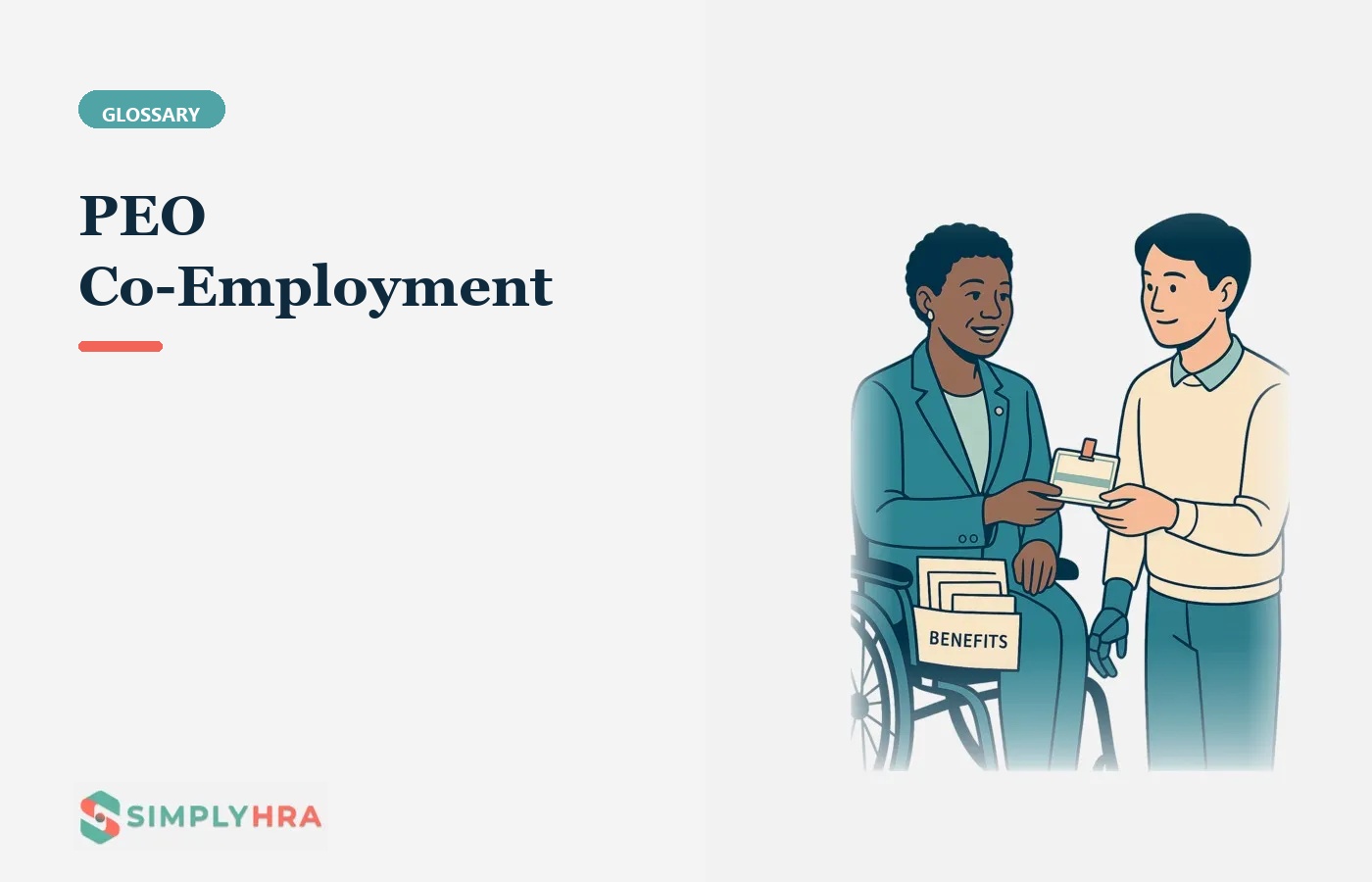
In modern human resources and benefits management, PEO Co-Employment represents a dual-employer structure governed by state statutes and the federal Internal Revenue Code (IRC § 7705 for Certified PEOs). Under this framework, two distinct legal entities share employer rights and obligations with respect to worksite employees.
What Is Co-Employment?

Allocation of Employer Responsibilities
The co-employment relationship divides administrative authority and legal accountability across defined operational boundaries:
| PEO Administrative Authority | Client Worksite Authority |
|---|---|
| Payment of wages and statutory payroll tax withholding under PEO EIN | Core business operations, product development, and customer delivery |
| Sponsorship and management of master group health, dental, and vision policies | Hiring, firing, compensation determination, and promotions |
| Securing master workers' compensation insurance and state unemployment accounts | Day-to-day supervision, task assignments, and performance management |
| Issuing annual IRS Form W-2 and statutory ACA reporting (Forms 1094-C / 1095-C) | Workplace safety standards and operational culture |
Advantages and Structural Limitations
While co-employment accelerates benefits access for startups with fewer than 10 workers, it creates structural lock-in as companies expand:
- Administrative Markup: PEOs charge heavy recurring administrative fees ($139–$220+ PEPM) compared to standalone HRIS platforms ($6–$12 PEPM).
- Master Trust Claims Risk: Healthy client companies absorb annual renewal increases caused by high healthcare claims from other organizations inside the PEO master trust.
- Exit Friction (SUTA Resets): Uncoupling from a PEO mid-year resets state unemployment tax wage bases, requiring careful calendar-year exit planning.
Transition from Co-Employment to Complete Corporate Independence
Break free from bundled PEO contracts ($139–$200+ PEPM) without losing premium health coverage. SimplyHRA pairs with standalone payroll to save thousands in administrative fees.
Learn How to Uncouple from a PEO →Related glossaries
Defined Contribution Healthcare
Minimum Participation Rate Requirement