ICHRA for Companies Facing Renewal Hikes
ICHRA for Companies Facing Renewal Hikes: A Quick Guide (2026)
TL;DR
Renewal hikes aren't a future problem anymore — 2026 already landed harder than expected in several states, and early 2027 filings are positioned to follow suit. Individual Coverage Health Reimbursement Arrangement (ICHRA) offers a way to escape: a fixed number that doesn't move based on claims history or whatever carriers decide to file next.
CHOICE (Custom Health Option and Individual Care Expense) Arrangement is the current name for what was previously referred to as an ICHRA (Individual Coverage Health Reimbursement Arrangement). This page uses both terms.
Key Takeaways
- Trend continues to climb, not level off: Preliminary 2026 filings point to an 11% national median, but several states' final approved rates ran well above that, and early 2027 filings are already tracking higher.
- Custom predictable costs: An HRA like an ICHRA assures fixed costs throughout the year for employers, whereas employees get the power to choose their own individual plan.
- No waiting for your renewal date: An ICHRA can start any time of the year with 90 days' notice, so a bad renewal letter doesn't have to mean another 12 months stuck with the same problem.
Every business with a group health plan knows the feeling.
The renewal letter shows up, and it's not really a number you get to argue with — it just hits you, and you can't hit back.
Sure, you can shop for other carriers, bump the deductible, and trim a benefit here and there to shave a few dollars off. But none of that changes who's actually setting the price.
It's still the carrier, running numbers you never see, on a timeline you didn't pick.
Which is exactly why budgeting around it feels impossible. You're not planning against a figure you landed on — you're planning against whatever shows up in the mail each fall.
How Bad Are Renewal Hikes Right Now?
Worse than the early projections suggested — and in a lot of places.
Back when insurers first filed their 2026 rate requests, the national median came in at 11%, according to Peterson-KFF's analysis of over 300 small-group insurers.
That was the number making headlines. But filed rates and final approved rates aren't always the same thing — once state regulators actually signed off, plenty of states landed well above that median.
Minnesota's approved small-group average came in at 14.22%. Rhode Island approved 17.6%.
The trend isn't slowing down, either. Insurers have already filed for 2027, and the preliminary national median has climbed to 14%.
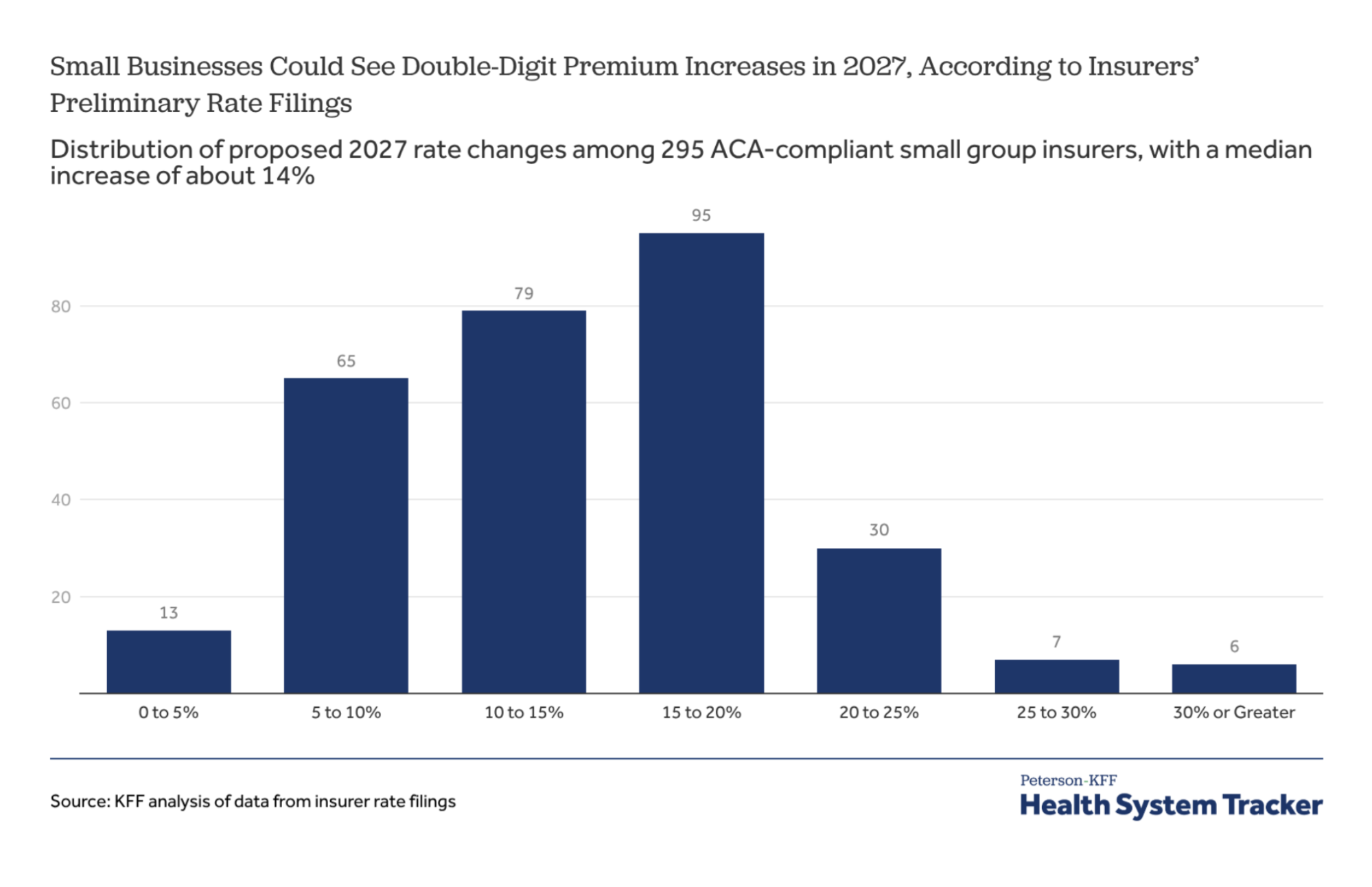
Look past the median and the picture gets clearer.
Nearly three-quarters of the 295 insurers in that filing round proposed increases of 10% or more, and the single largest cluster — 95 insurers — filed in the 15-to-20% range.
Insurers point to rising hospital, physician, and drug costs as the main driver, plus a quieter compounding factor: small-group enrollment keeps shrinking as more businesses move to self-insurance or drop coverage entirely, which pushes costs higher for whoever's left in the pool.
Why Does ICHRA Actually Fix This?
Group plans and ICHRA solve the budgeting problem in completely different ways.
A group plan is defined benefit, more or less.
You pick a plan, and the price attached to it moves every year based on your group's claims history, your carrier's overall risk pool, and whatever cost trends are hitting the market.
You don't set that number. You react to it.
ICHRA flips that by enabling defined contributions.
You decide the monthly allowance, and that's it. That number doesn't move just because claims came in higher this year, or because your carrier's underwriting team decides that your group looks riskier than it did in January.
In short, it moves whenever you decide to change it — not before.
The real shift is, instead of absorbing whatever a renewal letter says, you're setting a budget line and keeping it there.
Employees still get real coverage. They're shopping the individual marketing with your allowance instead of picking from whatever plans your group carrier offers.
Do You Have to Wait for Your Renewal Date to Switch?
No — and that's probably the most useful thing in this whole piece.
ICHRA can start any time of the year. You're not locked into January 1st or some open enrollment calendar dedicated by a carrier.
Just remember that there's a 90-day notice window before the plan should start. Still, planning for that lead time beats sitting on a bad renewal for another twelve months.
There's also a built-in safety net for employees. The first time you offer ICHRA, it opens a 60-day window for them to buy individual health coverage even if it's outside the normal enrollment period.
As such, switching to ICHRA mid-year doesn't leave anyone stranded without a plan to pick from.
Just one thing to remember: if you're moving off an existing group plan, line up the ICHRA start date with the day right after your group coverage ends. That way, nobody has a gap where they're left uncovered.
Things to Consider When Switching
Here's a quick rundown of key considerations when switching to ICHRA:
Run the Actual Numbers First
Don't switch because the renewal prices scare you. Compare what you'd realistically pay under ICHRA against what your renewal is asking for, factoring in the allowance level employees would actually need to buy comparable coverage.
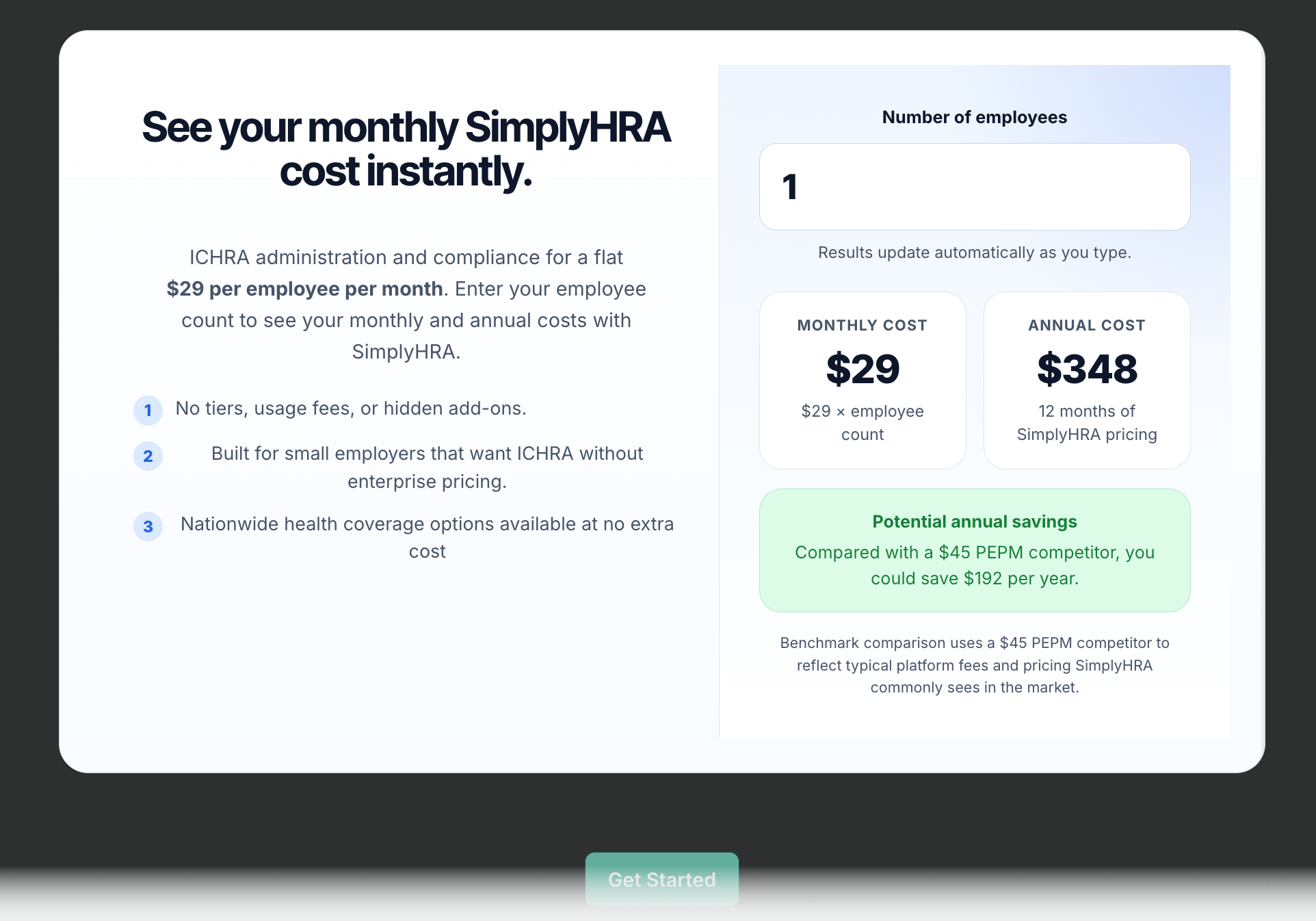
You also need to consider the cost of ICHRA administration. The good thing is, modern platforms like SimplyHRA come with a built-in cost calculator you can use.
Expect Some Employee Pushback
People are used to picking from two or three plans your broker curated.
Now, they're shopping the individual market themselves, which feels like another responsibility stacked onto them.
You need upfront communication and dedication to employee education during the switch. See to it that your ICHRA platform of choice comes with all the right tools, like a library of learning resources, in-app AI assistance, and private consultations on demand.
Don't Force Yourself to Manage the Rollout
Between the 90-day notice, the Special Enrollment Period (SEP), employee classes, and ongoing compliance tracking, ICHRA has a lot of moving pieces that can overwhelm you if you're unprepared.
Even self-service platforms like SimplyHRA ensure employers are equipped with the knowledge, tools, and guidance they need to implement a successful ICHRA plan. Factor ICHRA administration features and support options when choosing your platform.
Must-Read: How to Switch From Group Plan to ICHRA (2026 Guide)
Final Words
ICHRA gives employers a real way out of the bad cycle revolving renewal hikes.
As long adhere to the ICHRA compliance requirements, you're in full control of your yearly costs. Not to mention that your start date doesn't have to line up with anyone's calendar.
SimplyHRA makes the switch even smoother.
Setup is self-service and takes less than a day. The flat $29 per employee per month (PEPM) rate also won't move regardless of when you start and the size of your team.
Request a personal demo here today.
Related blogs
Navigating ICHRA Compliance in 2026: Guide + Checklist
HMO vs PPO vs EPO for Employers