Provider Network
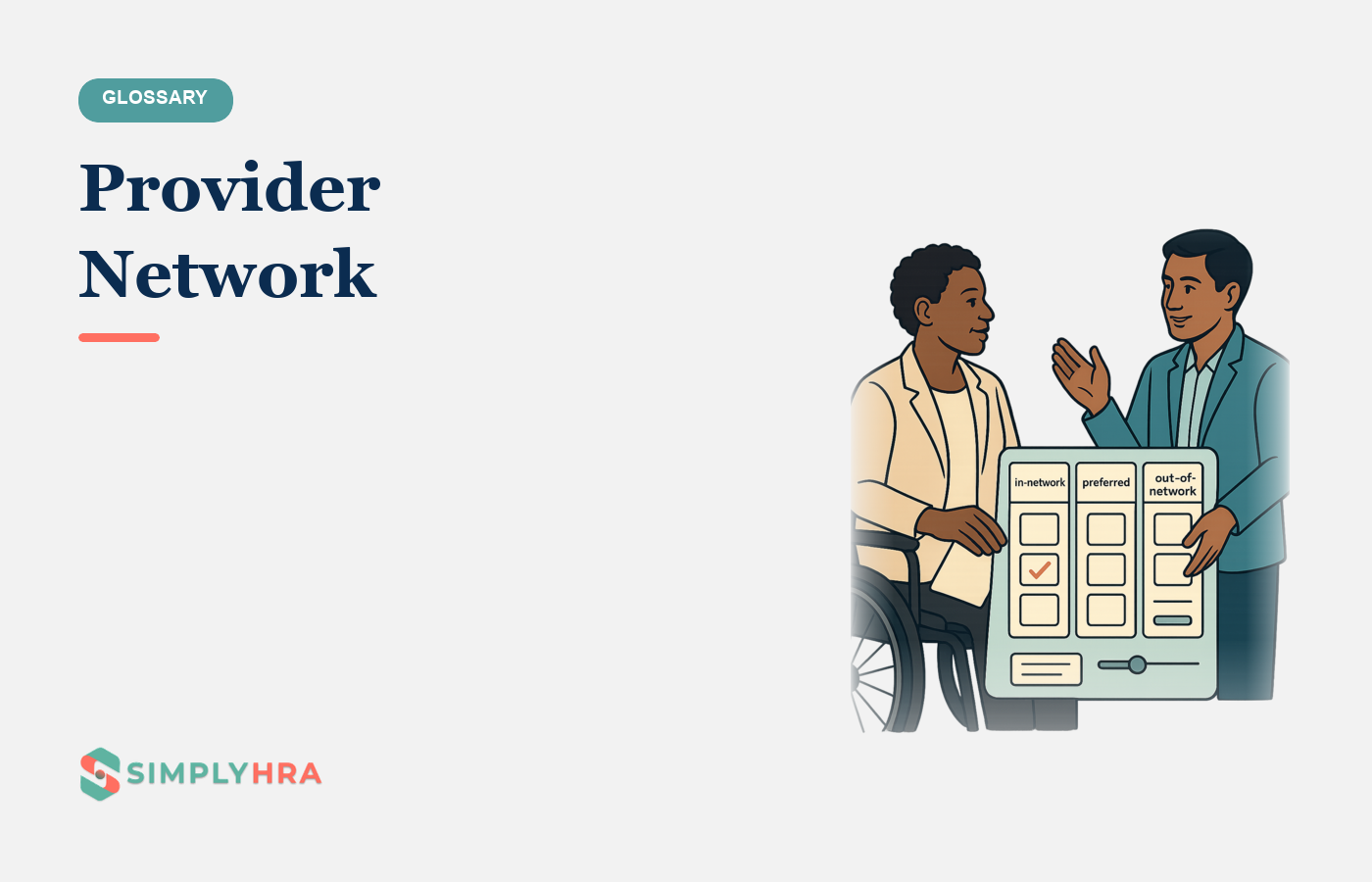
Provider Network: What Employers and Employees Need to Know
Provider Network means the group of doctors, hospitals, pharmacies, laboratories, and other healthcare providers that a health plan has contracted with to serve its members at negotiated rates. Put simply, it’s the plan’s approved map of where you can get covered care without paying the higher costs that often come with going outside that map.
Meta description
Learn what a Provider Network is, how in-network and out-of-network care works, and what employers and employees should check before choosing health coverage.
What is a provider network?
A network is one of the main ways an insurance company organizes access to care and controls prices. Providers agree to contracted payment terms, and members usually receive their plan’s best cost-sharing terms when they use those providers.
“In network” doesn’t mean care is free. You may still owe a deductible, copayment, or coinsurance. It means the plan’s negotiated rate and in-network benefit rules generally apply.
“Out of network” usually means the provider doesn’t have a contract with your plan. Depending on the plan type, you might pay more, receive limited coverage, or have no coverage except in specified situations. A provider may also bill you for an amount the plan doesn’t pay, although federal and state protections restrict certain surprise bills.
The federal No Surprises Act generally protects patients from many unexpected out-of-network bills for emergency services and certain services received at an in-network facility. Those protections are explained in the Centers for Medicare & Medicaid Services guidance titled “No Surprises: Understand your rights against surprise medical bills.”
How does a provider network work in practice?
Suppose you need a dermatologist. You search the insurer’s directory, confirm that the doctor participates in your exact plan, make an appointment, and show your insurance card. After the visit, the provider sends a claim to the insurer, which applies the contracted rate and determines what the plan pays and what you owe.
The exact plan name matters. A medical group might accept one plan from an insurer but not another, even when both plans display the same insurance company logo. Provider participation can also change during the year, so call the provider and check with the insurer before non-emergency care.
Common network designs include:
- Health Maintenance Organization (HMO): usually centers care around a defined network and may require a primary care physician or referrals.
- Exclusive Provider Organization (EPO): generally covers non-emergency care only within the network but may not require referrals.
- Preferred Provider Organization (PPO): usually allows out-of-network care, though your share of the cost can be much higher.
- Point of Service (POS): combines network rules with primary-care coordination and may include some out-of-network benefits.
These are general patterns, not guarantees. The plan’s Summary of Benefits and Coverage and policy documents control. Federal Summary of Benefits and Coverage requirements appear in Department of Labor regulations at 29 Code of Federal Regulations § 2590.715-2715.
Who do provider networks apply to?
Networks matter to employees, spouses, and dependents enrolled in employer-sponsored coverage, as well as people buying individual insurance through the Health Insurance Marketplace or directly from an insurer. Medicare Advantage, Medicaid managed care, and the Children’s Health Insurance Program may also use networks, but their rules differ.
If you’re an employer, you’ll want to assess whether a plan includes providers near your workers, especially when employees live in multiple counties or states. A low premium can lose its appeal quickly if employees can’t find nearby primary care, mental health, pediatric, or specialty services. Marketplace plan issuers are subject to federal network-adequacy standards under 45 Code of Federal Regulations § 156.230, alongside any applicable state rules.
If you’re an employee, check the doctors, hospitals, prescriptions, and facilities your household actually uses before enrolling. If you’re currently uninsured, the network should be part of your plan comparison—not an afterthought—because changing plans later may require a Marketplace Open Enrollment Period or a qualifying life event that creates a Special Enrollment Period.
What does a provider network cost an employer?
A network doesn’t carry a separate price tag on most fully insured group plans; its cost is built into the premium. Plans with narrower local networks may have lower premiums, while broader networks may cost more, but that isn’t a universal rule. A self-funded employer may also pay network-access and claims-administration fees.
The harder cost to spot is poor fit. If a plan excludes the only practical hospital near part of your workforce, employees may postpone care, pay more out of network, or ask you to replace the plan.
Offering a network-based plan creates disclosure and administration duties, not a federal duty to include every doctor an employee wants. For most private employer health plans, you should:
- Provide the Summary of Benefits and Coverage with enrollment materials, upon request, and generally at least 30 days before a new plan year when coverage renews automatically.
- Give advance notice of certain midyear material coverage reductions.
- Keep plan documents and provider-directory information accessible, working with your insurer or third-party administrator when the network changes.
- Follow federal surprise-billing protections and applicable state network-adequacy rules.
The timing and content rules come from the Departments of Labor, Health and Human Services, and Treasury’s Summary of Benefits and Coverage regulations. Federal provider-directory and surprise-billing requirements appear in the No Surprises Act regulations issued by those departments.
Penalties depend on what went wrong. A willful failure to provide a compliant Summary of Benefits and Coverage can trigger an inflation-adjusted fine for each failure. Certain group-plan violations can also produce an Internal Revenue Code Section 4980D excise tax of $100 per affected person per day, although exceptions and correction rules may apply. Your insurer may perform much of the operational work, but the employer sponsoring the plan shouldn’t assume the carrier contract transfers every responsibility.
How does the network affect an employee’s coverage and paycheck?
Your network doesn’t usually change the amount deducted from your paycheck after enrollment; that deduction is based on the plan and coverage tier you chose. It does affect what happens when you seek care. Out-of-network deductibles and coinsurance can be higher, and amounts above the plan’s allowed charge may not count toward your in-network out-of-pocket limit.
If you have no insurance, don’t choose only by monthly premium. Before enrolling through work or the Health Insurance Marketplace, check your prescriptions, nearby hospitals, regular doctors, and any specialists you expect to use. HealthCare.gov’s Marketplace guidance also tells shoppers to review each plan’s provider directory and covered-drug list.
An Individual Coverage Health Reimbursement Arrangement (ICHRA) or Qualified Small Employer Health Reimbursement Arrangement (QSEHRA) works differently from one group network. You select an eligible individual policy and its network, then receive employer reimbursements under the arrangement’s rules. An ICHRA offer can affect eligibility for a Marketplace premium tax credit based on affordability, so an uninsured employee should compare the employer offer before accepting or declining it. The governing federal guidance includes the 2019 ICHRA final rule and Internal Revenue Service Notice 2017-67 for QSEHRAs.
Worked example
Cedar Street Design has 10 employees and offers each person up to $500 per month through an HRA. Its maximum reimbursement budget is 10 × $500 = $5,000 monthly, or $60,000 annually.
On SimplyHRA’s Basic plan, the platform cost is 10 × $9 = $90 monthly, making the maximum combined monthly outlay $5,090. Premium would cost 10 × $29 = $290, making that maximum $5,290.
Maya chooses an individual policy with a $460 monthly premium because its network includes her endocrinologist and preferred hospital. If that premium is eligible and properly substantiated, Cedar Street reimburses $460 tax-free. The unused $40 isn’t automatically extra pay; what happens to it depends on the HRA’s plan terms.
Common provider network mistakes
- “The hospital is in network, so everyone there is too.” An anesthesiologist, laboratory, or other clinician may have a different contract. Federal surprise-billing rules protect many—but not every—out-of-network situation.
- “The doctor takes this insurance company.” That doesn’t confirm participation in your exact plan. Match the full plan name and identification number, then verify with both the provider and insurer.
- “A directory listing guarantees coverage.” Directories can lag behind contract changes. Save screenshots or call-reference numbers; federal rules may require in-network cost sharing when someone reasonably relied on inaccurate directory information.
Frequently Asked Questions About Provider Network
What happens if my doctor leaves the network while I’m receiving treatment?
You may qualify as a “continuing care patient” if you’re undergoing treatment for a serious condition, pregnant and receiving pregnancy-related care, scheduled for non-elective surgery, terminally ill, or receiving institutional or inpatient care. Under the Consolidated Appropriations Act, 2021 continuity-of-care provisions and implementing federal regulations, eligible patients may generally continue covered care at in-network terms for up to 90 days. The plan should notify you, but contact it promptly because the protection isn’t automatic for every ongoing relationship.
Does a provider network affect my premium tax credit?
The network itself doesn’t determine your eligibility for a premium tax credit. Eligibility generally depends on factors such as household income, tax-filing status, Marketplace enrollment, and access to qualifying employer or government coverage under Internal Revenue Code Section 36B and 45 Code of Federal Regulations Section 155.305(f). However, your credit can be applied only to an eligible Marketplace plan. Compare networks after viewing your credit because two plans with similar net premiums can offer very different access to doctors and hospitals.
Will my health insurance network work in another state?
Maybe, but don’t assume it will. Some plans have multi-state or national networks, while others cover routine care only within a local service area. Emergency services receive special federal protections, but follow-up appointments, routine visits, and elective procedures while traveling may be out of network. Before a trip or move, ask the insurer about care outside your service area, prescription refills, telehealth, and whether moving creates a Special Enrollment Period. Permanent relocation can require choosing a new plan rather than keeping the old network.
Does a referral or prior authorization mean the provider is in network?
No. A referral is a clinician’s direction to obtain other care, while prior authorization is the plan’s approval that a service meets specified coverage rules. Neither one necessarily confirms the provider’s network status or guarantees payment. Check the facility, clinician, laboratory, imaging center, and other involved providers separately before scheduled care. Keep the authorization number and network confirmations. The plan can still apply deductibles, coinsurance, medical-necessity rules, or exclusions after granting prior authorization.
Are telehealth doctors always in my plan’s network?
No. A health plan may use a separate telehealth company, limit virtual coverage to certain clinicians, or treat your regular doctor’s video appointment differently from an in-person visit. The clinician may also need to be licensed where you’re physically located during the appointment. Confirm the telehealth platform, individual clinician, visit type, and expected cost before booking. If an employer offers a stand-alone virtual-care benefit, that benefit doesn’t necessarily make the same clinicians in network under the employer’s medical plan.
Can I request an exception to see an out-of-network specialist?
You can ask, especially when the network lacks a provider with the needed specialty, accessibility, language skills, or appointment availability. Plans may call this a network-gap exception or single-case agreement. Approval can allow the visit to be processed at in-network cost sharing, but it doesn’t always stop the provider from billing above the plan’s allowed amount unless payment terms are settled. Request approval in writing before non-emergency care and use the plan’s internal appeal process if the request is denied.
Do provider network rules change from state to state?
Yes. States may set their own standards for appointment wait times, travel distances, provider directories, continuity of care, and surprise bills for state-regulated insurance. Those rules can differ from federal minimums. Self-funded employer plans are generally governed by the federal Employee Retirement Income Security Act of 1974 (ERISA) and aren’t subject to many state insurance mandates, while fully insured plans usually are. Your insurance card or plan documents can help identify the arrangement; ask the state insurance department or plan administrator if you’re unsure.
Can I change plans during enrollment if the network doesn’t include my doctor?
During your employer’s open enrollment window, you can generally select any option for which you’re eligible, subject to the employer’s deadline. Outside that window, disliking a network—or learning that a doctor isn’t included—usually doesn’t create a special enrollment right by itself. Events such as marriage, birth, adoption, or loss of other coverage may permit a midyear election, often with a 30-day request deadline under Health Insurance Portability and Accountability Act special-enrollment rules. Marketplace event types and selection deadlines may differ.
Do owners, part-time employees, and new hires get the same network?
If they enroll in the same plan, they normally use the same network, but eligibility may differ. An owner’s eligibility depends on the business structure, ownership status, insurer rules, and plan document. Part-time workers may be excluded if the eligibility terms consistently permit it. A new hire may face a waiting period, but an otherwise eligible employee’s group-health waiting period generally can’t exceed 90 days under Public Health Service Act Section 2708 and the final waiting-period regulations. An employer can also offer different plans to legitimate employee classes if applicable nondiscrimination rules are met.
What happens to my provider network if I elect COBRA?
The Consolidated Omnibus Budget Reconciliation Act (COBRA) generally continues the same employer plan rather than creating a new network. You’ll usually keep the network available to similarly situated active employees, including any employer-wide network changes at renewal. You may have to pay the entire premium plus up to a 2% administrative charge. COBRA generally gives you at least 60 days to elect, and timely election and payment can make coverage retroactive to the date prior coverage ended. Department of Labor guidance, An Employee’s Guide to Health Benefits Under COBRA, explains these federal timelines.
How do provider networks work with Medicare or Medicaid?
Original Medicare generally lets you use clinicians who accept Medicare nationwide, while Medicare Advantage plans often use Health Maintenance Organization or Preferred Provider Organization networks. Medicare Supplement Insurance, commonly called Medigap, supplements Original Medicare and doesn’t create a separate medical provider network, though Medicare SELECT policies can impose network conditions. Medicaid rules vary by state; many beneficiaries enroll in managed-care plans with defined networks. If you have employer coverage too, network status and which plan pays first are separate questions. Centers for Medicare & Medicaid Services guidance on Medicare coordination of benefits governs the payer order.
Review Your Provider Network Before Choosing Coverage
Remember three things: check the exact plan rather than just the insurance company’s name, confirm both the facility and individual clinicians, and verify participation again before planned care. Employers should consider whether a network works across their workforce, while employees should compare the doctors, hospitals, prescriptions, and locations that matter to their families.
SimplyHRA fits small businesses and startups that want to offer employees more individual choice without taking on enterprise-level benefits overhead. Through an Individual Coverage Health Reimbursement Arrangement (ICHRA) or Qualified Small Employer Health Reimbursement Arrangement (QSEHRA), an employer sets a tax-free monthly allowance and each employee chooses an individual plan with a provider network that fits their needs. We built SimplyHRA after living small-business benefits problems ourselves, and we’ve helped other owners and their teams set up and run these benefits without the enterprise overhead.
This article is educational and isn’t legal or tax advice. For a consultation about employer or employee benefits, email info@simplyhra.com or schedule a call.
Related glossaries
Provider Network
Member ID Card