
The 30-60-90 Day ICHRA Implementation Checklist for Small Business Owners
The 30-60-90 Day ICHRA Implementation Checklist for Small Business Owners
Transitioning from a traditional small-group health plan to an Individual Coverage Health Reimbursement Arrangement (ICHRA) is one of the most effective strategies for eliminating healthcare cost unpredictability. However, because an ICHRA integrates with public health insurance exchanges and federal tax codes (IRC § 105), execution requires strict adherence to statutory timelines and ERISA disclosure rules.
Implementing an Individual Coverage HRA requires four key milestones: defining permissible employee classes under 26 CFR 54.9802-4, delivering the mandatory 90-day written ICHRA notice, establishing special enrollment shopping windows on ACA exchanges, and configuring tax-free payroll disbursements. Small businesses can transition smoothly in 30 to 90 days following this structured implementation checklist.
The Implementation Timeline at a Glance
| Milestone | Primary Objectives | Key Statutory Deliverables |
|---|---|---|
| T-Minus 90 Days | Plan Architecture & Legal Notices | Deliver Mandatory 90-Day Written Notice; define permissible employee classes; establish allowance amounts. |
| T-Minus 60 Days | Employee Education & Marketplace Access | Activate Special Enrollment Period (SEP); distribute marketplace enrollment guides; verify subsidy opt-out rights. |
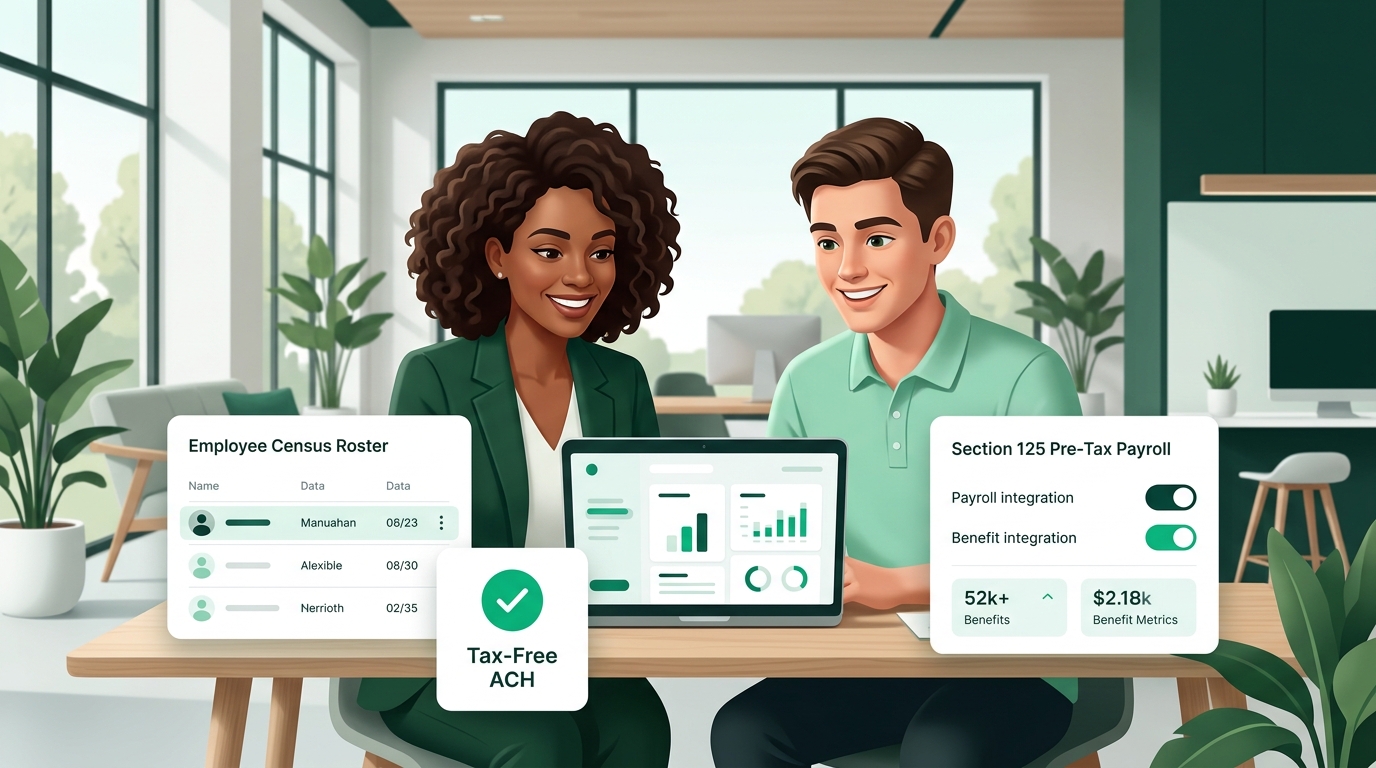
| T-Minus 30 Days | Roster Onboarding & Banking Rails | Upload employee census to SimplyHRA; configure employer banking; set up pre-tax Section 125 payroll deductions. |
| Day 1 & Beyond | Active Plan Execution & Compliance | Automated claims substantiation; monthly ACH disbursements; annual W-2 Box 12 Code FF reporting. |
Phase 1: T-Minus 90 Days — Plan Design & Mandatory Written Notice
The foundation of a legally compliant ICHRA is established at least 90 days before the plan year begins:
- Define Permissible Employee Classes: Under federal regulations (26 CFR 54.9802-4), employers can segment employees into 11 recognized classes to offer customized allowance tiers:
- Full-time vs. part-time employees
- Salaried vs. hourly workers
- Geographic rating areas (state or metro territory)
- Seasonal or temporary workers
- Waiting period status
- Establish Monthly Defined Contribution Allowances: Determine fixed monthly reimbursement caps per class (e.g. $450/month for full-time employees, $250/month for part-time). You may age-band allowances up to a maximum 3:1 ratio between the oldest and youngest worker.
- Issue Mandatory 90-Day Written ICHRA Notice: Federal law strictly mandates that all eligible employees receive written notice at least 90 days prior to coverage inception. The notice must specify:
- Exact monthly allowance amounts available to the employee's class.
- Coverage effective dates.
- Explanation that accepting the ICHRA disqualifies the employee from ACA marketplace premium tax credits (subsidies) if the offer is affordable.
- Opt-out procedures and Special Enrollment Period instructions.
Compliance Alert: Failure to deliver timely written notices violates ERISA disclosure rules and risks Department of Labor penalties up to $110 per day per affected employee.
Phase 2: T-Minus 60 Days — Employee Marketplace Shopping & Special Enrollment
Sixty days prior to launch, the focus shifts to employee education and enrollment:
- Special Enrollment Period (SEP) Activation: Offering an ICHRA triggers a federally guaranteed 60-day Special Enrollment Period on HealthCare.gov and state-based exchanges (Covered California, Pennie, NY State of Health, etc.), allowing employees to enroll in individual health plans outside standard annual open enrollment.
- Employee Decision Workshops: Host educational webinars explaining that employees can select any individual carrier (Kaiser, Blue Cross, UnitedHealthcare, Cigna, Aetna) and any metallic tier (Bronze, Silver, Gold, Platinum).
- Affordability & Subsidy Assessment: For employees who qualify for large marketplace subsidies, ensure they understand their right to opt out of an unaffordable ICHRA and retain their premium tax credits.
Phase 3: T-Minus 30 Days — Platform Roster Upload & Banking Rails
With 30 days remaining, administrative systems are configured for automated execution:
- Upload Employee Census to SimplyHRA: Export your employee roster from Gusto, QuickBooks, Rippling, or ADP containing legal name, date of birth, residential zip code, and assigned class. Upload directly into SimplyHRA.
- Connect Employer Banking: Link your operating account to SimplyHRA's secure ACH disbursement network for automated, tax-free reimbursement processing.
- Establish Section 125 Pre-Tax Payroll Lines: If an employee selects an individual plan whose premium exceeds the employer allowance (e.g. $550 premium vs. $400 allowance), set up a Section 125 pre-tax deduction in your payroll software for off-exchange plans, saving both employer and employee payroll taxes.
Phase 4: Day 1 & Ongoing — Claims Substantiation & Tax Reporting
Once the plan is active, administrative operations run smoothly through automated workflows:
- IRS Claims Substantiation: Under IRC Section 105(b), reimbursements cannot be paid without proof of coverage. SimplyHRA automates receipt verification and Explanation of Benefits (EOB) attestation.
- Monthly Reimbursement Cycle: Approved healthcare disbursements are sent via direct ACH deposit into employee bank accounts.
- Annual Tax Reporting: SimplyHRA generates the required annual summary reporting for IRS Form W-2 Box 12 (Code FF), detailing total non-taxable HRA benefits made available to each employee.
Frequently Asked Questions: ICHRA Implementation
Can an ICHRA be launched mid-year outside the standard January 1 cycle?
Yes. An employer can establish an Individual Coverage HRA at the start of any calendar month. Offering an ICHRA qualifies all newly eligible employees for a 60-day Special Enrollment Period on state and federal exchanges.
What is the minimum class size required to offer an ICHRA?
If an employer offers an ICHRA exclusively across all workers, there is no minimum class size. However, if an employer offers traditional group coverage to one class and an ICHRA to another, minimum class size thresholds apply (minimum 10 employees in the ICHRA class for employers with fewer than 100 workers).
What happens if an employee fails to buy individual insurance?
If an employee fails to maintain active individual health coverage, they cannot receive ICHRA reimbursements. Unused employer allowances simply remain in the employer's bank account.
Launch Your Company's ICHRA in Under 30 Days
SimplyHRA handles permissible class setup, automated compliance notices, employee onboarding, and direct ACH disbursements for a flat $29/PEPM.
Schedule Your Onboarding Walkthrough →Related blogs
ICHRA vs. PEO: Cost, Compliance & Flexibility Comparison for Startups
2027 Employer Health Insurance Cost Benchmark: Group Plan Inflation vs. Fixed ICHRA Budgeting