Waiting Period
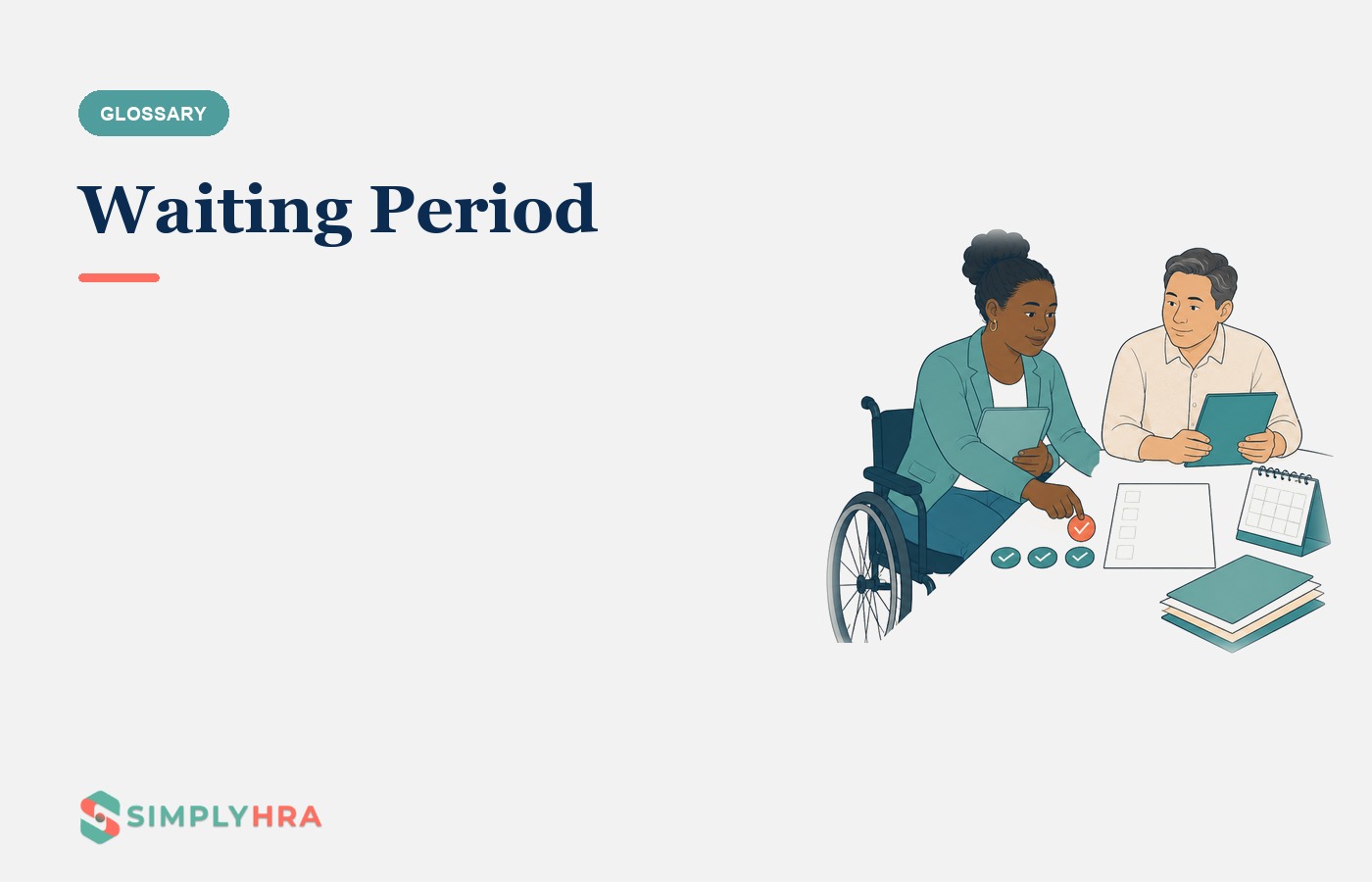
When you’re setting up employee health benefits, one of the first compliance questions that comes up is the Waiting Period. It sounds simple, how long before a new hire can access benefits?, but under federal law, it’s more nuanced than most small business owners expect. If you’re an HR manager trying to stay compliant, or an employee wondering why coverage doesn’t start on day one, understanding how a Waiting Period works is essential.
CHOICE (Custom Health Option and Individual Care Expense) Arrangement is the current name for what was previously referred to as an ICHRA (Individual Coverage Health Reimbursement Arrangement). This page uses both terms.
As someone who has worked with hundreds of small businesses on health reimbursement arrangements and ACA compliance, I can tell you this: getting the Waiting Period wrong can lead to penalties, employee frustration, and unnecessary risk. Let’s break it down in plain English.
What Is a Waiting Period in Health Benefits?
A Waiting Period is the amount of time that must pass before a new employee becomes eligible to participate in an employer-sponsored health plan.
Under the Affordable Care Act (ACA), the federal government limits how long that period can be. According to the U.S. Department of Labor and the IRS, group health plans may not impose a Waiting Period that exceeds 90 calendar days.
That’s not 90 business days. Not three months. Ninety calendar days.
Eligibility vs. Coverage Start Date
Here’s where many employers get tripped up.
A Waiting Period applies to eligibility: not necessarily the exact date coverage becomes active.
For example:• An employee becomes eligible after 60 days.• Coverage begins on the first of the following month.• As long as total waiting time doesn’t exceed 90 calendar days, you’re compliant.
The 90-day rule is outlined in federal regulations under the ACA (see healthcare.gov and dol.gov guidance on group health plan waiting periods).
Why the Waiting Period Matters for Small Businesses
If you’re running a 10-, 20-, or 50-person company, benefits are personal. You likely know every employee by name. A long Waiting Period can feel like you’re holding back support. But a short one can create cost pressures.
Here’s how different stakeholders experience it.
From the Employer’s Perspective
For small business owners, the Waiting Period affects:
• Cash flow planning
• Risk management
• Administrative workload
• Employee retention
Some employers use a 30-day waiting period to stay competitive in hiring. Others choose 60 days to align with payroll cycles. What you can’t do is exceed 90 days for ACA-compliant group health plans.
If you’re an Applicable Large Employer (ALE), generally 50+ full-time equivalent employees, the rules become even more critical. You must offer coverage that meets minimum value and affordability standards or potentially face IRS penalties under Section 4980H.
From the HR Manager’s Perspective
HR managers often shoulder the compliance burden.
Key things to monitor:
Start date tracking
You must count calendar days precisely.Variable-hour employees
You may use a measurement period to determine full-time status, but once deemed eligible, coverage must begin within the ACA timelines.Documentation
Keep clear records of:• Offer letters
• Eligibility policies
• Enrollment communications
If audited, you’ll need proof your Waiting Period policies comply with federal law.
From the Employee’s Perspective
For employees, a Waiting Period can feel stressful, especially if they left another job and lost prior coverage.
Common concerns include:• “What if I have a medical emergency?”• “Can I get Marketplace coverage temporarily?”• “Do I qualify for COBRA from my previous employer?”
Employees may enroll in a Marketplace plan during a Special Enrollment Period triggered by loss of other coverage. Once employer coverage becomes available, they may choose to transition.
Clear communication is everything. Uncertainty breeds anxiety.
How Waiting Period Rules Apply to ICHRA
Now let’s talk about Individual Coverage HRAs (ICHRAs), since many small businesses are moving away from traditional group plans.
An ICHRA is not a group health insurance policy. Instead, it reimburses employees tax-free for individual health insurance premiums and qualified medical expenses.
So how does the Waiting Period work here?
ICHRA Eligibility Timing
ICHRAs may include eligibility conditions, including a waiting period. However:
• If you’re an ALE, your ICHRA must still satisfy ACA employer mandate timing rules.• The effective date of the ICHRA must align with when employees are required to be offered coverage.
Because employees must be enrolled in individual health insurance to receive reimbursements, coordination becomes crucial.
Important detail:Individual health coverage typically starts on the first day of a month (per Marketplace rules at healthcare.gov). That means even if your ICHRA eligibility begins mid-month, employees may not be able to activate individual coverage until the next month.
This is where thoughtful plan design matters.
Practical Example
Let’s say:• Employee hire date: March 10
• Waiting Period: 60 days
• Eligibility date: May 9
Since individual plans generally start on the first of a month, coverage would likely begin June 1. That still complies as long as the total delay doesn’t violate ACA timing rules.
Without proper planning, though, you could unintentionally push past the 90-day limit.
Common Waiting Period Mistakes to Avoid
I’ve seen these errors more times than I can count.
Confusing 90 days with 3 months
Three months can exceed 90 calendar days.Using probationary periods improperly
A “probation period” cannot extend beyond 90 days if it delays health plan eligibility.Failing to coordinate with payroll
Delays in enrollment processing can create compliance issues.Not documenting eligibility classes
With ICHRA, employee classes (full-time, part-time, seasonal, etc.) must be clearly defined and consistently applied.Overlooking state-specific nuances
Some states layer additional requirements on top of federal law.
When in doubt, review Department of Labor guidance or consult a knowledgeable benefits advisor.
How to Design a Waiting Period That Works
There’s no one-size-fits-all approach, but here’s what I typically recommend to small businesses.
Step 1: Align With Your Hiring Strategy
If you’re competing for talent, a shorter Waiting Period can be a differentiator.
Startups often choose:• First of the month following hire
or
• 30 days from hire
Established small businesses sometimes use:• 60 days
to manage benefit costs.
Step 2: Coordinate With Enrollment Windows
For ICHRA-based benefits:
• Account for Marketplace enrollment timing
• Communicate deadlines clearly
• Offer onboarding support
Employees who miss enrollment windows may face coverage gaps.
Step 3: Communicate Early and Often
During onboarding, explain:
• When benefits become available
• What employees must do
• Deadlines for enrolling in individual coverage
• What happens if they decline
Don’t assume they understand health insurance mechanics. Most don’t.
Step 4: Automate Compliance Where Possible
Manually tracking eligibility dates in spreadsheets works, until it doesn’t.
Automation helps:• Calculate eligibility timelines
• Trigger employee notifications
• Maintain audit-ready records
• Prevent missed deadlines
That’s particularly important for growing teams.
The Bigger Picture: Balancing Compliance and Care
At the end of the day, the Waiting Period isn’t just a regulatory requirement. It’s a reflection of how your company supports its people.
Too long, and employees feel undervalued.
Too short without planning, and the business feels financial strain.
The sweet spot balances:
• Legal compliance
• Budget control
• Employee experience
Small businesses have a real advantage here. You can design benefits intentionally rather than defaulting to rigid, enterprise-style policies.
Why SimplyHRA Makes Waiting Period Compliance Easier
Managing a compliant Waiting Period, especially when offering an ICHRA, requires precise timing, documentation, and coordination with individual coverage rules. That’s exactly where SimplyHRA helps. We automate eligibility tracking, align reimbursement start dates with ACA requirements, support employees with enrollment guidance, and maintain audit-ready compliance records so small business owners and HR managers don’t have to lose sleep over technicalities. If you’d like help designing a compliant and employee-friendly benefits strategy, email info@simplyhra.com or schedule a call at https://simplyhra.com/contact. Let’s make health benefits simpler, together.
How Waiting Periods Interact With Other Federal Laws
When we talk about a Waiting Period, most people immediately think about the ACA’s 90-day limit. But that’s only part of the story. Depending on your company size and plan type, other federal laws can come into play.
ERISA Considerations
If you offer a traditional group health plan, or even an ICHRA, your benefits are generally governed by ERISA (the Employee Retirement Income Security Act). ERISA requires that plan terms, including eligibility and waiting periods, be clearly documented in:
• The Plan Document
• The Summary Plan Description (SPD)
If your written documents say “coverage begins after 30 days,” but in practice you’re enrolling employees after 75 days, that inconsistency could create legal exposure.
Clear documentation isn’t just bureaucracy. It protects the business and ensures employees understand their rights.
HIPAA and Nondiscrimination Rules
Under HIPAA’s nondiscrimination provisions, eligibility rules, including a Waiting Period, must not discriminate based on health factors.
That means you cannot:
• Extend a waiting period because someone has a medical condition
• Shorten it only for “healthy” employees
• Apply different timing based on claims history
Eligibility classifications must be based on bona fide employment categories, such as:
• Full-time vs. part-time
• Salaried vs. hourly
• Geographic location
• Seasonal status
With ICHRA, these employee classes are explicitly allowed under IRS and Department of Labor rules, but they must be applied consistently.
Special Situations Employers Overlook
In real life, employees don’t always fit into neat categories. Let’s walk through situations that tend to raise questions.
Rehired Employees
If you rehire someone who previously worked for your company, do they have to satisfy the Waiting Period again?
The answer depends on:
• How long they were gone
• How your plan document defines rehire eligibility
• Whether they’re treated as a new hire under your policies
Many employers waive the waiting period if the break in service is short (for example, less than 13 weeks). However, that approach should be clearly outlined in your written policy.
Consistency is key. If you make exceptions informally, you could create discrimination concerns.
Temporary-to-Full-Time Transitions
What about an employee who starts as part-time and later moves to full-time status?
In that case, the Waiting Period may begin when they become eligible, not necessarily when they were first hired.
For example:
• Hired January 1 as part-time (ineligible for benefits)
• Promoted to full-time April 1
• Waiting Period begins April 1
This is permitted under ACA rules, but timing must still comply with the 90-day maximum once eligibility criteria are satisfied.
Seasonal and Variable-Hour Employees
If you employ variable-hour or seasonal workers, the ACA allows a measurement period to determine full-time status.
Here’s how it generally works:
- You track hours over a defined measurement period (often 3 to 12 months).
- If the employee averages 30+ hours per week, they’re treated as full-time.
- Coverage must then be offered within required administrative timelines.
This measurement framework is separate from a traditional Waiting Period, but the two concepts often overlap in practice. Misunderstanding the distinction can lead to compliance errors, particularly for Applicable Large Employers.
The IRS provides detailed guidance on this under Section 4980H regulations at irs.gov.
Financial Planning Around a Waiting Period
Let’s shift gears for a moment. Beyond compliance, there’s a budgeting conversation every small business owner should have.
Forecasting Benefit Costs
A shorter Waiting Period means:
• Employees enroll sooner
• Reimbursements or premiums begin earlier
• Cash flow impact accelerates
A longer (but compliant) waiting period:
• Delays benefit expense
• Reduces short-term cost exposure
• May increase turnover risk if competitors offer faster access
When using an ICHRA, cost control becomes more predictable because:
• You set a defined monthly allowance
• You reimburse only verified expenses
• There are no surprise group premium increases
That flexibility allows many small businesses to confidently offer a 30-day or first-of-the-month waiting structure without fearing runaway costs.
The Hidden Cost of Delayed Benefits
There’s also an opportunity cost to consider.
Employees who feel unsupported during a Waiting Period may:
• Delay needed medical care
• Experience financial stress
• Quietly start looking for other jobs
Replacing an employee can cost thousands in recruiting and training. In that light, shaving 30 days off a waiting period might actually save money in the long run.
Employee Communication Strategies That Actually Work
I’ll be candid: most benefits confusion isn’t about rules. It’s about communication gaps.
If you want to reduce HR headaches, address the Waiting Period clearly during onboarding.
What to Include in Offer Letters
Your offer letter should specify:
• Eligibility criteria
• Length of the Waiting Period
• Expected coverage start date
• Any employee action required
Avoid vague phrases like “benefits begin after probation.” Be specific.
Onboarding Checklist for Employees
For companies offering ICHRA, provide new hires with:
• A step-by-step guide to enrolling in individual coverage
• Marketplace deadlines
• Documentation requirements for reimbursement
• Contact information for support
At SimplyHRA, we’ve seen that proactive onboarding dramatically reduces last-minute enrollment scrambling.
State-Level Nuances to Keep on Your Radar
Federal law sets the 90-day maximum Waiting Period for most plans. However, certain states may have additional insurance regulations that affect:
• Small group plan underwriting
• Continuation coverage rules
• Individual market enrollment timelines
For example, state-based Marketplaces may have slightly different operational procedures during special enrollment periods. While federal ACA standards apply nationwide, local implementation details matter.
That’s why it’s important to ensure your benefits platform or broker understands multi-state compliance if you have remote employees.
Waiting Period and Company Culture
It might surprise you, but the Waiting Period sends a cultural signal.
A company that says, “Benefits start immediately,” communicates trust and commitment.
A company that says, “Benefits after 90 days,” may unintentionally signal caution or risk management priorities.
Neither approach is inherently wrong. What matters is alignment with:
• Your financial model
• Your talent strategy
• Your values
For startups trying to recruit experienced professionals, immediate or 30-day access to an ICHRA can be a powerful differentiator, without locking the business into rigid group insurance contracts.
Designing a Smarter Approach With SimplyHRA
When small businesses come to us, they’re often unsure how to structure a compliant Waiting Period that balances cost, culture, and ACA timing requirements. We help employers define clear eligibility classes, automate tracking so the 90-day limit is never exceeded, coordinate ICHRA start dates with individual coverage rules, and provide employees hands-on enrollment support. The result is a benefits experience that feels intentional, not improvised. If you’d like guidance tailored to your workforce, reach out to info@simplyhra.com or schedule a call at https://simplyhra.com/contact. Let’s build a benefits strategy that works for your business and your people.
Frequently Asked Questions (FAQs) about Waiting Period:
Q: Can a Waiting Period be different for different types of employees?
A: Yes, but only if the distinctions are based on legitimate job classifications and applied consistently. For example, you may set one Waiting Period for full-time employees and another for part-time employees, as long as the structure complies with ACA rules and nondiscrimination requirements. With an ICHRA, the IRS specifically allows different employee classes (such as seasonal, salaried, hourly, or geographic location), but the waiting period for each class must still stay within federal timing limits and be clearly documented in your plan materials.
Q: Does the 90-day Waiting Period rule apply to dental and vision benefits?
A: It depends. If dental or vision coverage is offered as an excepted benefit under federal law (meaning it’s separate from major medical and not integrated into a group health plan), the ACA’s 90-day waiting period limitation may not apply. However, many employers align all benefits under a consistent eligibility policy to simplify administration and avoid confusion. Always confirm how your ancillary benefits are structured under ERISA and ACA definitions.
Q: Can an employer waive the Waiting Period for a specific new hire?
A: While it may seem harmless to make a one-off exception, selectively waiving a Waiting Period can create nondiscrimination risks. Eligibility terms should be applied uniformly within each employee class. If you anticipate flexibility being necessary for recruiting purposes, it’s better to amend your written policy prospectively rather than making informal exceptions that could raise compliance concerns later.
Q: How does a Waiting Period affect employees who experience a qualifying life event?
A: A qualifying life event, such as marriage or loss of other coverage, may create a Special Enrollment Period for someone already eligible for benefits. However, it does not typically override an employer’s Waiting Period if the employee has not yet met eligibility requirements. In other words, the life event allows enrollment changes, but it does not accelerate eligibility unless your plan specifically allows it.
Q: Are Waiting Periods allowed for dependent coverage?
A: Yes. Employers may impose a Waiting Period that applies to dependents, provided it follows the same legal limits as employee eligibility. Under the ACA, if you are an Applicable Large Employer offering dependent coverage to avoid penalties, that offer must also comply with the 90-day maximum waiting period rule. Clear communication is especially important so employees understand when their spouse or children can enroll.
Q: What happens if an employer accidentally exceeds the 90-day Waiting Period limit?
A: Exceeding the federal maximum could expose the employer to penalties, particularly if the company is subject to the ACA employer mandate. The IRS may assess penalties under Internal Revenue Code Section 4980H if coverage is not offered on time to full-time employees. If an error occurs, employers should correct it promptly, document the correction, and consult a qualified benefits advisor or legal counsel to mitigate potential liability.
Q: Can a Waiting Period apply to remote employees working in different states?
A: Yes, a Waiting Period can apply to remote employees, but multi-state employers should ensure their policy aligns with both federal requirements and any applicable state insurance rules. While the ACA sets the 90-day federal cap, state-based Marketplaces and insurance carriers may have operational differences that affect enrollment timing. Consistency across locations, paired with proper documentation, helps reduce compliance risk.
Q: Is there a minimum Waiting Period required by law?
A: No. Federal law sets a maximum of 90 calendar days for most group health plans, but it does not require employers to impose any waiting period at all. An employer may choose to offer coverage immediately upon hire or on the first day of employment. The decision is largely strategic and financial rather than regulatory, provided all other ACA requirements are satisfied.
Q: Does a Waiting Period apply to Health Reimbursement Arrangements like QSEHRA as well as ICHRA?
A: Yes, employers may include a Waiting Period for a QSEHRA, but eligibility rules differ slightly because QSEHRA is only available to small employers with fewer than 50 full-time equivalent employees and cannot be offered alongside a group health plan. QSEHRA rules allow certain employees to be excluded (such as those under age 25, part-time, seasonal, or within their first 90 days of employment). The 90-day maximum still serves as an important compliance benchmark.
Q: If an employee declines coverage during the Waiting Period, can they enroll later?
A: If the employee is still within their initial eligibility window after the Waiting Period ends, they may enroll at that time. However, if they decline coverage after becoming eligible and miss the enrollment window, they generally must wait until the next plan year unless they experience a qualifying life event. For ICHRA participants, enrollment in individual health insurance must align with Marketplace enrollment rules.
Q: How is the Waiting Period calculated if an employee takes unpaid leave during that time?
A: The 90-day Waiting Period is based on calendar days, not days worked. That means unpaid leave, vacation, or sick time typically does not pause or extend the waiting period unless your eligibility criteria are based on cumulative hours worked. Employers should clearly define whether eligibility is time-based (for example, 60 calendar days) or hours-based (for example, completion of 500 hours). Ambiguity in policy language can create compliance issues.
Q: Can a collective bargaining agreement override standard Waiting Period rules?
A: A collective bargaining agreement (CBA) may define eligibility and benefit timing for union employees, but it still must comply with applicable federal laws, including ACA waiting period limits. Employers with unionized workforces should review both the CBA and federal regulations to ensure alignment. Special rules can apply depending on the structure of the health plan negotiated.
Q: Does the Waiting Period affect eligibility for COBRA coverage?
A: The Waiting Period itself does not directly impact COBRA eligibility. COBRA continuation rights apply after a qualifying event results in loss of coverage under a group health plan. However, if an employee never became eligible due to not completing the Waiting Period, COBRA would not apply because they were never enrolled in the plan. This distinction matters when responding to termination or reduction-of-hours scenarios.
Q: Are employers required to notify employees in writing about the Waiting Period?
A: Yes, eligibility terms, including any Waiting Period, must be clearly outlined in plan documents and communicated through the Summary Plan Description (SPD) for ERISA-covered plans. Additionally, Applicable Large Employers must provide required ACA notices regarding coverage offers. Transparent written communication reduces misunderstandings and strengthens compliance posture.
Q: Can an employer shorten the Waiting Period mid-year?
A: In many cases, yes, but changes must be handled carefully. For group health plans, mid-year eligibility changes may require a formal plan amendment and updated employee communications. For ICHRA or QSEHRA, adjustments must remain consistent with IRS rules and nondiscrimination standards. Employers should document the effective date of the change and apply it uniformly within affected employee classes.
Q: Does a Waiting Period impact eligibility for Health Savings Accounts (HSAs)?
A: Indirectly, it can. An employee must be enrolled in a qualified High Deductible Health Plan (HDHP) to contribute to an HSA. If the Waiting Period delays enrollment in an HDHP, the employee cannot make HSA contributions during that time. For employees transitioning from other coverage, timing matters because HSA contribution limits are prorated based on months of HDHP eligibility.
Q: How should employers handle errors in communicating the Waiting Period?
A: If an employer mistakenly communicates an incorrect eligibility date, they should correct the information immediately in writing and assess whether the employee relied on the incorrect representation. In some cases, honoring the earlier date may reduce legal risk and employee dissatisfaction. Documentation and prompt corrective action are essential to minimize exposure under ERISA fiduciary standards.
Q: Can technology platforms help manage Waiting Period compliance?
A: Absolutely. Automated systems can track hire dates, calculate eligibility deadlines, generate enrollment notices, and maintain digital audit trails. For growing small businesses without a dedicated HR department, automation significantly reduces the likelihood of missing the 90-day maximum or misapplying eligibility rules across employee classes.
Bringing Clarity and Confidence to Your Waiting Period Strategy
A compliant Waiting Period isn’t just a technical requirement: it’s a balancing act between federal law, employee expectations, and responsible budgeting. Whether you’re navigating the ACA’s 90-day limit, coordinating eligibility across employee classes, or aligning ICHRA start dates with Marketplace enrollment rules, the details matter. Small missteps can create penalties, confusion, or unnecessary stress for your team. But when designed thoughtfully, your waiting period policy can support both compliance and a positive employee experience.
At SimplyHRA, we’ve been in your shoes. We’ve worked with growing startups hiring their first employees, family-owned businesses without a full HR department, and multi-state teams trying to keep eligibility timelines straight. Our platform automates waiting period tracking, documents eligibility rules properly, aligns reimbursements with federal requirements, and supports employees step-by-step so no one is left guessing about when coverage begins. Instead of juggling spreadsheets and regulatory guidance, you get a streamlined, audit-ready system that just works.
If you want to design a Waiting Period policy that’s compliant, cost-controlled, and employee-friendly, let’s talk. Email us at info@simplyhra.com or schedule a consultation at https://simplyhra.com/contact. We’ll help you build a health benefits program that supports your business and your people with confidence.
Related glossaries
Navigator / Enrollment Assister
Health Insurance Broker (vs agent vs navigator)