Third-Party Administrator (TPA)
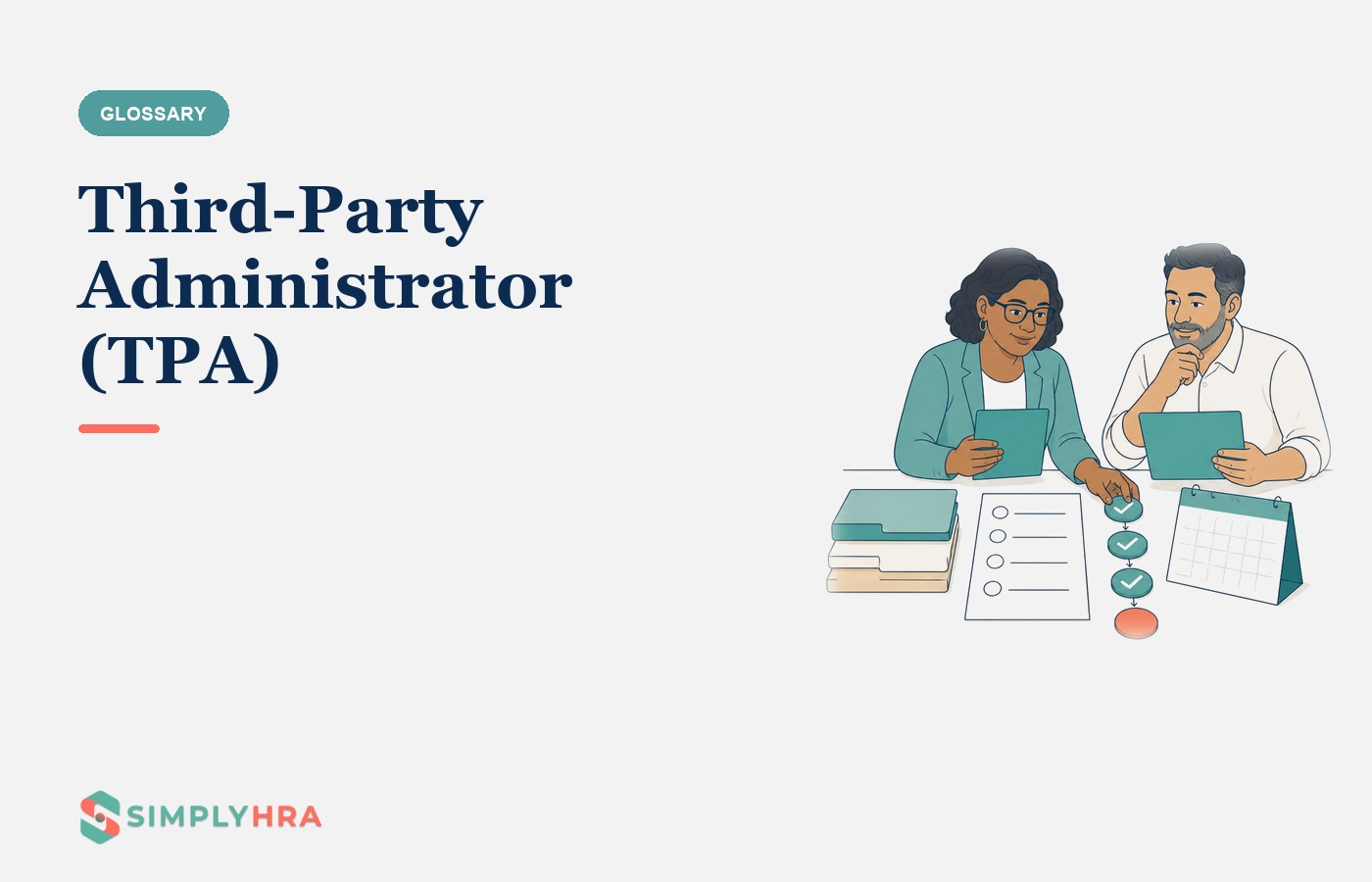
If you’ve ever shopped for employee health benefits, you’ve probably come across the term Third-Party Administrator (TPA) and thought, “Wait… who’s actually running this plan?” You’re not alone. For small business owners and HR managers, the health benefits world is full of acronyms, and TPAs are one of the most misunderstood.
CHOICE (Custom Health Option and Individual Care Expense) Arrangement is the current name for what was previously referred to as an ICHRA (Individual Coverage Health Reimbursement Arrangement). This page uses both terms.
As a co-founder of SimplyHRA, I spend a lot of time helping employers untangle who does what in their benefits ecosystem. So let’s slow it down and break this into plain English: what a Third-Party Administrator (TPA) is, what they do, and how they affect your employees and your bottom line.
What Is a Third-Party Administrator (TPA)?
A Third-Party Administrator (TPA) is an independent company that administers health benefit plans on behalf of an employer or insurance company. In simple terms, they handle the paperwork and operations, but they don’t insure the risk.
Think of it this way:
- The employer sponsors the plan.
- The insurance carrier may underwrite the risk (in fully insured plans).
- The TPA handles the administrative heavy lifting.
What Does a TPA Actually Do?
A TPA’s responsibilities often include:
- Processing claims
- Verifying eligibility
- Managing enrollment
- Handling COBRA administration
- Providing customer service to employees
- Ensuring compliance with federal laws like ERISA (Employee Retirement Income Security Act)
For self-funded (also called self-insured) health plans, TPAs are especially common. In these arrangements, the employer pays employee medical claims directly and hires a TPA to administer the plan.
According to the U.S. Department of Labor (dol.gov), employers sponsoring ERISA-covered health plans are fiduciaries and must ensure the plan is administered properly. That’s where a TPA often comes in, to help fulfill those administrative obligations.
Why Do Small Businesses Use a Third-Party Administrator (TPA)?
Now you might be wondering: “Why not just let the insurance company handle everything?”
Great question.
For Self-Funded Plans
When a business chooses a self-funded health plan, they’re taking on the financial risk of claims. But they still need:
- Claims processing systems
- Provider network access
- ID cards
- Compliance oversight
- Appeals management
A TPA provides this infrastructure without being the insurance company itself.
For Level-Funded Plans
Level-funded plans, popular among small businesses, blend features of fully insured and self-funded plans. In many cases, a TPA administers the plan while a stop-loss carrier protects the employer from catastrophic claims.
For Ancillary Benefits
TPAs also administer:
- Health Reimbursement Arrangements (HRAs)
- Flexible Spending Accounts (FSAs)
- COBRA continuation coverage (required under federal law for employers with 20+ employees, per dol.gov)
If you’ve ever offered an FSA or HRA, you’ve likely worked with a TPA, even if you didn’t realize it.
How Does a TPA Affect Employees?
From an employee’s perspective, the Third-Party Administrator (TPA) is often the company listed on their ID card or the one answering the phone when they call about a claim.
Claims and Customer Experience
When employees:
- Submit medical claims
- Check deductible balances
- Appeal denied claims
- Ask coverage questions
They’re often interacting directly with the TPA.
A good TPA makes the experience smooth and transparent. A poor one? Long hold times, confusing explanations of benefits (EOBs), and frustrated employees.
And here’s the reality: employees don’t care who’s technically responsible. If something goes wrong, they’ll come to HR first.
Compliance and Tax Implications
For tax-advantaged accounts like HRAs and FSAs, TPAs help ensure compliance with IRS rules. The IRS outlines specific requirements for health reimbursement arrangements under Internal Revenue Code Sections 105 and 106 (irs.gov).
If reimbursements are handled incorrectly, employers could jeopardize the tax-advantaged status of the benefit. That’s not a small risk.
What’s the Difference Between a TPA and an Insurance Carrier?
This is where things get blurry.
Insurance Carrier
An insurance carrier:
- Collects premiums
- Assumes financial risk
- Pays claims under a policy
They’re regulated by state insurance departments and are financially responsible for claims.
Third-Party Administrator (TPA)
A TPA:
- Does not assume risk
- Processes claims
- Administers plan operations
- Acts as a service provider
In self-funded plans, the employer assumes the financial risk, not the TPA.
That distinction matters. If you’re self-funded, your company ultimately pays claims: even though the TPA processes them.
Risks and Responsibilities for Employers
Hiring a Third-Party Administrator (TPA) doesn’t mean outsourcing responsibility.
Under ERISA, employers are fiduciaries of their benefit plans. According to the U.S. Department of Labor, fiduciaries must act prudently and in the best interest of plan participants.
That means:
- Vetting the TPA carefully
- Reviewing service agreements
- Monitoring performance
- Ensuring compliance standards are met
You can delegate tasks, but not fiduciary responsibility.
Questions to Ask Before Hiring a TPA
If you’re evaluating one, consider asking:
- How do you handle compliance updates?
- What reporting tools do you provide?
- What are your average claim processing times?
- How do you support employees directly?
- What cybersecurity protections are in place for PHI (Protected Health Information)?
Healthcare data security isn’t optional. TPAs must comply with HIPAA privacy and security rules (hhs.gov).
TPAs and HRAs: Where Things Get Interesting
Now let’s bring this back to small businesses exploring alternatives to traditional group health insurance.
Health Reimbursement Arrangements (HRAs), including ICHRAs and QSEHRAs, are employer-funded, tax-advantaged benefit models allowed under IRS regulations and the Affordable Care Act.
In most cases, an HRA requires some form of administration, often provided by a TPA or a specialized benefits platform.
Why Administration Matters for HRAs
With HRAs, employers must:
- Verify employees have Minimum Essential Coverage (MEC)
- Review eligible expenses under IRS Publication 502
- Maintain proper documentation
- Issue required notices (especially for ICHRA under ACA rules)
Doing this manually? Risky and time-consuming.
That’s where modern platforms, like SimplyHRA, act similarly to a TPA but are purpose-built for small businesses that want automation, compliance safeguards, and employee-friendly tools.
Is a TPA Right for Your Small Business?
It depends on your structure and goals.
You might need a Third-Party Administrator (TPA) if:
- You’re self-funding a health plan
- You’re offering an HRA or FSA
- You need COBRA administration
- You want to outsource claims management
But if you’re a small business trying to avoid complexity and unpredictable premium hikes, you may not need a traditional self-funded arrangement at all.
Instead, many growing companies are moving toward defined contribution models like ICHRA, where:
- The employer sets a fixed reimbursement budget
- Employees choose their own individual health insurance
- Administration is automated
- Compliance is built into the platform
That’s a very different experience than juggling multiple vendors: a carrier, a broker, a TPA, and payroll.
Bringing It All Together for Small Employers
A Third-Party Administrator (TPA) plays an important role in the health benefits ecosystem, especially for self-funded and tax-advantaged plans. They handle claims, compliance tasks, and day-to-day administration, but employers still carry fiduciary responsibility and financial risk in many cases.
For small businesses, the key question isn’t just “Do I need a TPA?” It’s “What’s the simplest, most compliant way to offer meaningful benefits without drowning in paperwork or unpredictable costs?”
At SimplyHRA, we help small business owners and HR managers offer compliant, tax-advantaged health benefits, without enterprise-level complexity. Our platform automates reimbursements, verifies eligibility, handles documentation, and provides 24/7 AI-powered support so employees aren’t left guessing. If you’re evaluating your benefits strategy or wondering whether a traditional TPA model makes sense, let’s talk. Email us at info@simplyhra.com or schedule a call at https://simplyhra.com/contact to explore the right solution for your business and your team.
How Third-Party Administrator (TPA) Fees Really Work
One area that rarely gets explained clearly is cost. When small businesses hear “Third-Party Administrator (TPA),” they often assume it’s bundled into their insurance premium. Sometimes it is. Often, it’s not.
Common TPA Fee Structures
TPA pricing can vary depending on plan type and services provided. Here’s what you might see:
- Per employee per month (PEPM) fee
- Percentage of total claims paid
- Flat annual administrative fee
- Add-on charges for services like COBRA, HIPAA reporting, or custom reporting
For self-funded plans, TPAs typically charge a PEPM fee for core services like claims processing and eligibility management. But here’s the catch: many services are considered “extra.”
Those extras may include:
- Appeals handling
- Form 5500 preparation (required for many ERISA plans, per dol.gov)
- Non-discrimination testing
- Stop-loss coordination
Before signing a contract, employers should ask for a full breakdown of fees, not just the headline number.
Hidden Costs to Watch
It’s not that TPAs are trying to hide anything. It’s that administrative complexity adds up quickly.
Watch for:
- Implementation fees
- Data integration fees
- Custom reporting fees
- Minimum monthly billing thresholds
- Run-out claim fees after plan termination
If you’re a small business with tight margins, these details matter. A few dollars per employee per month may not seem like much, until you multiply it across your team and add variable claim exposure.
Compliance Oversight and Fiduciary Risk
Here’s where things get serious.
When you hire a Third-Party Administrator (TPA), you’re delegating operational duties, but not legal responsibility. Under ERISA, employers remain plan fiduciaries. That means you must:
- Act in the best interest of employees
- Monitor service providers
- Ensure reasonable fees
- Maintain proper documentation
The U.S. Department of Labor has been clear that fiduciary responsibility cannot be outsourced entirely.
The Importance of Service Agreements
A strong administrative services agreement (ASA) should clearly define:
- Scope of services
- Performance guarantees
- Data ownership
- Liability limitations
- Indemnification terms
Don’t just skim this document. I always recommend having legal counsel review it, especially if you’re self-funding. The wrong language could shift more operational risk back onto your business than you realize.
Data Security and Cyber Liability
Health plans store highly sensitive data: Social Security numbers, medical diagnoses, dependent information. A data breach isn’t just embarrassing; it can trigger serious legal exposure.
TPAs that handle Protected Health Information (PHI) must comply with HIPAA privacy and security rules enforced by the U.S. Department of Health & Human Services (hhs.gov).
Questions About Cybersecurity
Small businesses should ask:
- Do you conduct annual security audits?
- Are you SOC 2 certified?
- How is PHI encrypted?
- What happens if there’s a breach?
- Who carries cyber liability insurance?
If a breach occurs at the TPA level, employees will still look to you, the employer, for answers. It’s your plan.
When a TPA May Not Be the Right Fit
Let’s be candid: not every small business needs a traditional Third-Party Administrator (TPA) model.
Fully Insured Plans
If you’re fully insured, the insurance carrier typically handles claims administration. In those cases, you may not need a separate TPA unless you’re layering on:
- An HRA
- An FSA
- COBRA administration
- Specialty carve-out benefits
Small Teams Seeking Simplicity
For startups and small teams, complexity can become the biggest enemy of adoption. If your benefits strategy requires:
- Multiple vendor contracts
- Stop-loss policies
- Detailed claims monitoring
- Actuarial forecasting
…it may not align with your internal bandwidth.
I’ve worked with founders who say, “Saif, I just want to offer great benefits without building a benefits department.” That’s a fair goal.
TPAs vs. Modern Benefits Platforms
There’s an important shift happening in the market.
Traditional TPAs were built primarily for:
- Self-funded group plans
- Larger employers
- Complex ERISA structures
Modern benefits platforms, especially those focused on ICHRAs and QSEHRAs, are purpose-built for small businesses that want defined contribution models instead of traditional risk-based insurance structures.
The Operational Difference
With a traditional TPA:
- You may still manage vendor coordination
- Payroll integrations can be manual
- Reporting may require special requests
- Employee support may be limited to business hours
With a modern HRA platform:
- Reimbursements can be automated
- Payroll integrations are built-in
- Compliance documentation is system-generated
- Employee support can be 24/7
The administrative philosophy is different. TPAs administer plans. Modern platforms streamline employer decision-making.
Employee Education and Communication Gaps
Another overlooked issue? Communication.
Many TPAs focus on backend claims processing but offer limited proactive employee education. That can lead to:
- Confusion during open enrollment
- Misunderstanding of deductibles
- Surprise out-of-pocket costs
- Frustration with HR
Small businesses don’t always have in-house benefits experts to fill those gaps.
If employees don’t understand how their plan works, the benefit loses perceived value, even if it’s technically robust.
Regulatory Changes and Adaptability
Healthcare regulations evolve. Just look at:
- Affordable Care Act affordability thresholds (updated annually by the IRS)
- ERISA reporting requirements
- COBRA continuation rules
- IRS guidance on HRAs
A Third-Party Administrator (TPA) should proactively update employers on regulatory changes, not wait for you to ask.
Ask About Compliance Monitoring
Before engaging a TPA, confirm:
- How are regulatory updates communicated?
- Do you provide written compliance summaries?
- Are plan documents updated automatically?
- Is ACA reporting support included?
If compliance feels reactive instead of proactive, that’s a red flag.
Strategic Questions for Business Owners
If you’re a founder or HR leader evaluating your options, here are a few big-picture questions to reflect on:
- Do I want to assume claims risk, or do I want predictable costs?
- Do I have internal bandwidth to monitor a TPA relationship?
- Is my workforce stable, seasonal, remote, or multi-state?
- Would employees benefit more from plan choice instead of one group plan?
Sometimes the conversation isn’t about whether a Third-Party Administrator (TPA) is good or bad. It’s about whether that model aligns with your business stage and philosophy.
A Smarter Path for Growing Small Businesses
Third-Party Administrators (TPAs) play an important role in self-funded and complex benefit arrangements, but they aren’t always the simplest solution for small and growing companies. Many small businesses today want predictable budgets, reduced fiduciary exposure, streamlined compliance, and happier employees who can choose their own coverage. That’s exactly where SimplyHRA fits in. We provide a compliant, automated way to offer tax-free health benefits without the administrative burden of managing multiple vendors or assuming insurance risk. If you’re rethinking your benefits strategy or want clarity on whether a TPA-based model is right for you, reach out to us at info@simplyhra.com or schedule a call at https://simplyhra.com/contact. Let’s build a benefits experience your employees will actually appreciate, and that your business can confidently sustain.
Frequently Asked Questions (FAQs) about Third-Party Administrator (TPA):
Q: Does a Third-Party Administrator (TPA) make decisions about what medical services are covered?
A: Generally, no. A TPA administers the plan based on the plan document created by the employer (or insurer in some arrangements). They apply the rules; they don’t usually set them. However, TPAs may interpret plan language when processing claims. That’s why clear plan documents matter. Ambiguity in plan terms can lead to inconsistent claim outcomes or disputes.
Q: Are TPAs regulated by the federal government?
A: It depends on the services they provide. If a TPA administers an ERISA-covered plan, the employer is subject to ERISA oversight by the U.S. Department of Labor. If the TPA handles Protected Health Information, they must comply with HIPAA privacy and security regulations enforced by the U.S. Department of Health & Human Services. Some states also regulate TPAs directly, particularly when they administer self-funded plans tied to stop-loss insurance. Regulation can vary by state and arrangement.
Q: Can a small business switch TPAs mid-year?
A: Yes, but it requires careful coordination. Switching TPAs involves transferring claims data, eligibility files, deductible accumulators, and open claims. Employers must also notify employees and ensure there’s no disruption in claims processing. If done mid-plan year, the transition can be complex, especially for employees undergoing ongoing treatment. Planning several months in advance is typically advisable.
Q: Do TPAs negotiate provider rates?
A: Most TPAs do not directly negotiate provider rates. Instead, they lease provider networks from established insurance carriers or network vendors. The network determines negotiated reimbursement rates with doctors and hospitals. Employers should ask which network is being used and whether it provides strong coverage in their employees’ geographic areas.
Q: What is a “carve-out” TPA arrangement?
A: A carve-out occurs when an employer uses a separate TPA for a specific benefit, such as pharmacy benefits, behavioral health services, or dental claims. For example, a company may have a medical TPA but use a separate Pharmacy Benefit Manager (PBM) to handle prescription drug claims. While carve-outs can provide specialized expertise, they also increase vendor management complexity.
Q: How does a TPA handle claim denials and appeals?
A: Under ERISA rules, group health plans must provide a formal appeals process. A TPA typically manages the initial review and internal appeals according to plan guidelines. However, the employer remains the plan sponsor and may be involved in final appeal decisions. External review rights may also apply under the Affordable Care Act for certain types of denials. Employers should confirm how appeals timelines are tracked and documented.
Q: What happens if a TPA goes out of business?
A: If a TPA becomes insolvent, claims processing and access to plan data can be disrupted. Employers should ensure their administrative services agreement includes provisions for data ownership, transition support, and access to historical claims information. Having a clear exit strategy written into the contract protects the employer and employees from sudden interruptions.
Q: Can a Third-Party Administrator (TPA) help with ACA reporting?
A: Some TPAs offer ACA reporting support, including Forms 1094-C and 1095-C preparation for Applicable Large Employers (ALEs). However, this is not always included in standard administrative fees. Employers should confirm whether ACA reporting, affordability calculations, and tracking of full-time status are part of the service package or require an additional vendor.
Q: Are TPAs involved in stop-loss insurance claims?
A: In self-funded arrangements with stop-loss coverage, the TPA typically assists in submitting large claims to the stop-loss carrier for reimbursement. While the stop-loss insurer ultimately pays qualifying excess claims, the TPA coordinates documentation and reporting. Employers should understand the attachment points (specific and aggregate) and how claim thresholds are monitored throughout the year.
Q: How does a TPA affect multi-state employers?
A: For businesses with employees in multiple states, TPAs can help manage varying provider networks and state-level continuation coverage requirements (sometimes called “mini-COBRA” laws). However, compliance with state insurance mandates may differ depending on whether the plan is fully insured or self-funded. Employers operating across state lines should verify that the TPA has experience with multi-state administration.
Q: Can employees contact the employer instead of the TPA for claims issues?
A: Employees can always contact their employer, but for privacy reasons and technical accuracy, claims-related questions are usually best handled directly by the TPA. Employers should establish clear communication guidelines so employees know when to call HR and when to contact the TPA’s customer service team.
Q: Is a TPA the same as a benefits broker?
A: No. A broker helps employers select and negotiate insurance plans. A Third-Party Administrator (TPA) handles ongoing administration after the plan is in place. Some brokers partner with TPAs, but their roles are distinct. Understanding this difference prevents confusion about who is responsible for plan design versus plan operations.
Q: Can a Third-Party Administrator (TPA) customize plan designs for my company?
A: A TPA can administer customized plan designs, but the employer (often with a broker or consultant) typically determines the structure. In self-funded arrangements, you have flexibility to adjust deductibles, copays, and covered services within federal and state guidelines. The TPA’s role is to operationalize those decisions, not create them independently. Always confirm what level of customization is supported within their administrative system.
Q: How long does it take to implement a TPA for a new health plan?
A: Implementation timelines vary, but 60 to 90 days is common for self-funded plans. The process includes drafting plan documents, setting up eligibility files, configuring claims systems, coordinating provider networks, and issuing employee ID cards. Rushing implementation can create eligibility errors or claims disruptions, so realistic timelines are important.
Q: What is a claims run-out period in a TPA contract?
A: A claims run-out period allows employees to submit claims incurred before a plan termination date. For example, if your plan ends December 31, employees may still have 60 to 180 days to submit outstanding claims. TPAs may charge separate run-out administration fees, so employers should clarify those terms in advance.
Q: Do TPAs manage wellness programs?
A: Some TPAs administer wellness incentives, biometric screenings, or health risk assessments, but not all do. If your company offers premium differentials tied to wellness participation, the TPA must administer those incentives in compliance with federal nondiscrimination rules under HIPAA and ACA guidelines. Not every administrator offers that capability.
Q: Can a TPA support union or collectively bargained plans?
A: Yes, many TPAs administer Taft-Hartley or union-sponsored health plans. These arrangements often have unique eligibility rules, contribution formulas, and reporting requirements. Employers involved in collective bargaining should confirm the TPA has specific experience with labor-managed trust funds.
Q: What reporting should employers expect from a TPA?
A: At a minimum, employers should receive monthly claims reports, enrollment summaries, and financial dashboards showing total paid claims, large claimants, and trend data. More advanced reporting may include predictive analytics or cost forecasting. Without clear reporting, it’s difficult for employers to monitor plan performance or meet fiduciary oversight duties.
Q: Are TPAs responsible for nondiscrimination testing?
A: In self-funded health plans, nondiscrimination testing under Internal Revenue Code Section 105(h) ensures that benefits do not disproportionately favor highly compensated employees. Some TPAs provide testing services, but others require employers to work with third-party compliance firms. Employers should verify whether this is included.
Q: How do TPAs coordinate benefits when an employee has dual coverage?
A: When an employee is covered under two health plans, coordination of benefits rules determine which plan pays first. The TPA applies standard industry rules to prevent duplicate payments. Employers should ensure their TPA follows National Association of Insurance Commissioners (NAIC) model guidelines for coordination practices.
Q: What role does a TPA play in open enrollment?
A: TPAs may provide enrollment platforms, employee communication materials, and eligibility tracking during open enrollment. However, strategic communication and education often remain the employer’s responsibility. Some TPAs offer call center support during enrollment windows, while others provide only backend processing.
Q: Can a TPA administer retiree health benefits?
A: Yes, many TPAs administer retiree medical plans, including tracking Medicare eligibility and coordinating secondary coverage. These arrangements often involve complex compliance obligations, including Medicare Secondary Payer rules. Employers offering retiree benefits should confirm that the TPA understands federal Medicare coordination requirements.
Q: Do TPAs handle state continuation coverage laws?
A: For employers under 20 employees and not subject to federal COBRA, some states have “mini-COBRA” requirements. Certain TPAs administer both federal COBRA and applicable state continuation coverage. Employers should confirm that the TPA monitors state-specific continuation obligations if they operate in multiple jurisdictions.
Q: Can employers audit a TPA’s claims processing accuracy?
A: Yes, and in self-funded arrangements, periodic claims audits are considered a best practice. Employers can hire independent audit firms to review a sample of processed claims for accuracy and compliance. Some TPA contracts include audit rights and performance guarantees tied to claims accuracy rates.
Q: What happens if there’s a dispute between the employer and the TPA?
A: Disputes are typically governed by the administrative services agreement. The contract should outline dispute resolution procedures, such as mediation or arbitration, and specify governing law. Employers should understand liability caps and indemnification clauses before signing.
Q: Does a TPA affect employee premium contributions?
A: In self-funded arrangements, the employer determines employee contribution amounts. The TPA tracks eligibility and deductions but does not usually set premium levels. However, administrative costs charged by the TPA may indirectly influence overall plan budgeting and contribution strategy.
Q: Can a TPA integrate with payroll systems?
A: Many TPAs offer payroll file integrations to streamline eligibility updates and contribution tracking. However, the level of automation varies widely. Some integrations are manual file uploads, while others are automated API connections. Employers should clarify how eligibility changes are transmitted and how often updates occur.
Q: Is a TPA required for every self-funded plan?
A: In practice, yes. Self-funded employers need a mechanism to process claims, maintain records, and ensure compliance. While technically an employer could attempt to administer claims internally, doing so would require sophisticated infrastructure, HIPAA compliance systems, and regulatory expertise. For most businesses, partnering with a qualified TPA is operationally necessary.
A Simpler Alternative to Traditional TPA Complexity
Navigating a Third-Party Administrator (TPA) relationship can feel overwhelming for small businesses. Between fiduciary responsibility under ERISA, claims oversight, data security concerns, compliance updates, and vendor coordination, the administrative load adds up quickly. TPAs absolutely play an important role in self-funded plans, but many small employers eventually realize they didn’t sign up to become health plan managers. They just want predictable costs, compliant benefits, and employees who feel supported.
That’s exactly why we built SimplyHRA. We’ve worked with founders, HR managers, and growing teams who were buried in paperwork, juggling multiple vendors, or frustrated by rising premiums and opaque claims processes. Instead of layering on more complexity, we help businesses shift to a defined contribution model through ICHRA or QSEHRA, where employers set a clear budget, employees choose their own individual health insurance, and our platform automates reimbursements, documentation, and compliance. No claims risk. No multi-vendor chaos. No wondering whether your TPA contract covers the latest regulatory change.
If you’re feeling stretched thin managing health benefits, or questioning whether a traditional TPA-based model still makes sense for your company, it may be time for a different approach. We’ve been in your shoes, and we built SimplyHRA to make this easier. Reach out to us at info@simplyhra.com or schedule a call at https://simplyhra.com/contact to talk through your current setup and explore a simpler, more predictable path forward for your team.
Related glossaries

Step Therapy